


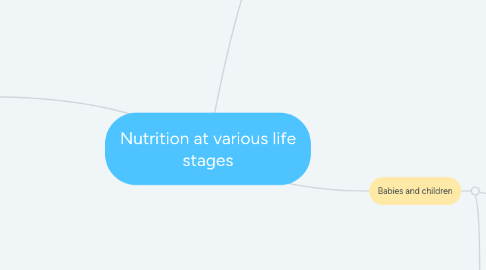
1. Edler adults
1.1. Eat foods that give you lots of nutrients without a lot of extra calories
1.1.1. Fruits and vegetables
1.1.2. Whole grains, like oatmeal, whole-wheat bread, and brown rice
1.1.3. Fat-free or low-fat milk and cheese, or soy or rice milk that has added vitamin D and calcium
1.1.4. Seafood, lean meats, poultry, and eggs
1.1.5. Beans, nuts, and seeds
1.2. Avoid empty calories
1.2.1. foods with lots of calories but few nutrients
1.3. Pick foods that are low in cholesterol and fat
1.4. Drink enough liquids
1.4.1. Some people lose their sense of thirst as they age.
1.5. Be physically active
2. Pregnant women
2.1. milk and products out of it should be pasteurised
2.2. no raw meat, it should be thoroughly cooked
2.3. avoid raw fish, cook it thoroughly
2.4. avoid baked goods with fillings or toppings which contain raw milk or raw eggs
3. Babies and children
3.1. need foods from all five healthy food groups – vegetables, fruit, grain foods, dairy and protein.
3.1.1. vegetables and fruits
3.1.1.1. give energy, vitamins, anti-oxidants, fibre and water.
3.1.1.2. help to protect your baby from diseases later in life
3.1.1.3. Wash fruit to remove dirt or chemicals
3.1.2. grain foods
3.1.2.1. bread, pasta, noodles, breakfast cereals, couscous, rice, corn, quinoa, polenta, oats and barley.
3.1.2.2. give the energy they need to grow, develop and learn.
3.1.2.3. wholegrain pasta and breads - longer-lasting energy and keep them feeling fuller for longer.
3.1.3. dairy
3.1.3.1. milk, cheese and yoghurt.
3.1.3.2. can be introduced from around six months
3.1.3.3. breastmilk should be the main drink until the age of 12 months
3.1.3.4. growing very fast - need a lot of energy
3.1.3.4.1. full-fat dairy products until they turn two.
3.1.4. proteins
3.1.4.1. lean meat, fish, chicken, eggs, beans, lentils, chickpeas, tofu and nuts.
3.1.4.2. important for your child’s growth and muscle development.
3.1.4.3. other useful vitamins and minerals like iron, zinc, vitamin B12 and omega-3 fatty acids. Iron and omega-3 fatty acids