


Multimodal Social Semiotics (MSS)
por DREW ALAN DANIN
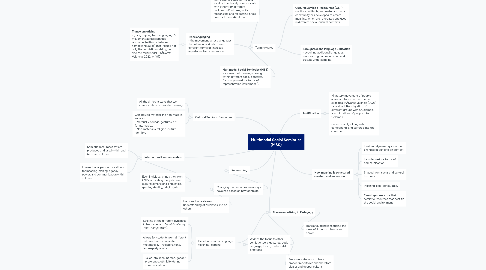
1. Cultural Semiotic Resources
1.1. All the different ways that we create and communicate meaning.
1.2. Can include material and non-material sources: - Material = sounds, gestures, art forms, music... - Non-material = religion, culture, identity...
2. Terminologies
2.1. **Intercultural Competence (IC)** - ability to effeively communicate with other from different background/cultures, while recognizing and respecting one's own background/culture.
2.2. **Multimodal Social Semiotics (MSS)** - approach of meaning-making within different social contexts, focusing on various forms of representation (multimodal).
2.3. **Cultural Semiotic Respources (CSR)** - actions, artifacts, and materials that a community has developed to create meaning, which are re-created and used in different social/cultural contexts.
2.4. **Translanguaging** - the movement across languages that allow individuals to use different forms of linguistic repertoires to communicate.
2.4.1. **Trans-semiotizing** - going beyong translanguaging: "a movement across semiotic resources (within or between named languages) that include not only the linguistic modality, but also the multimodal..." (Álvarez Valencia, 2022, p. 181)
2.5. **Foreign/second language Education** - acquiring additional languages, emphasizing communication and cultural understanding.
3. **Justification**
3.1. Migratory movement of people across cultures. In this chapter, specifically Álvarez Valencia (2023) talks about the migration of different groups within Colombia and migrations of people into Colombia. Superdiversity of linguistic components and cultures into the classroom.
4. How meaning is structured, created, and understood
4.1. Fluid and dynamic system that changes depending on context.
4.2. Includes various forms of communicaition.
4.3. Shaped from social and cultural histories.
4.4. Meaning is co-constucted.
4.5. Meaning-makers use their semiotic resources that best fit the social environment.
5. Intercultural Communication
5.1. Semiotic resources that are produced and used within and between cultures.
5.2. Intersectional perspective allows for meaning-making, agency, power, and communication within cultures.
5.3. Each individual brings their own CSRs, activating many different cultural dimensions: linguistics, gender, identity, religion, etc.
6. Re-sourcing
6.1. Changing the resources we always have had based on new contexts.
6.1.1. Helps us to create new understanding of oursleves and of others.
7. **Trans-semiotizing in Pedagogy**
7.1. Translanguaging is reducing the ideas of linguistic change and power.
7.2. Widens the focus to other semiotic tools: gestures, body language, touch, multimodal practices.
7.2.1. Empowers students to have broader repertoires and therefore clearer and deeper cultural understandings.
7.3. Decolonization of language teaching/learning.
7.3.1. Looking at the different dynamics in language (e.g. *Namtrik, Namuy wam, Kampa wam*).
7.3.2. Allows for students from different cultures to communicate multimodally - registers, tone, language dynamics...
7.3.3. Takes into account race, gender, preference, ethnicity during communication.