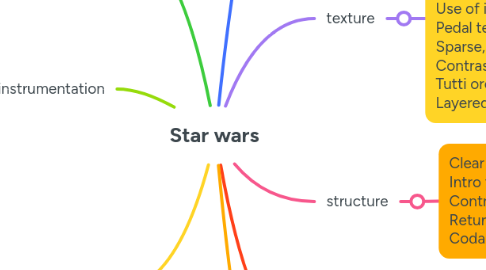
1.1. Frequent use of f and ff dynamics – supports the huge, powerful orchestral sound. Sudden dynamic contrasts (e.g., ff → p) – add drama and cinematic impact. Crescendo into big brass entries – builds anticipation and heroic energy. Quieter dynamics in the “space” section – create tension and a feeling of vast emptiness. Full-orchestra climaxes – give the music its epic, blockbuster identity.
2. instrumentation
2.1. Full symphony orchestra used – creates a massive, cinematic sound. Heavy brass presence (trumpets, trombones, horns) – delivers the fanfare and heroic tone. Strings play rapid, energetic figures – add excitement and movement underneath the melody. Timpani rolls and rhythmic hits – give weight and drama. Woodwind add colour and brightness – enhances the orchestral richness. Contrasting light vs. heavy textures depending on section – supports the storytelling and emotional shifts.
3. tempo metre and rhythmn
3.1. 4/4 metre with a strong, driving pulse – gives the opening a march-like, heroic feel. Use of dotted rhythms in the main theme – adds energy and confidence. Triplet fanfare rhythms in brass – create a powerful, ceremonial effect. Syncopation in accompaniment parts – increases excitement and rhythmic interest. Rhythmic ostinatos in the middle section – build tension and continuity. Rhythms become freer in the “space” section – produces a floating, mysterious atmosphere.Fast tempo (Allegro) in opening – enhances the sense of action and heroism. Tempo slows in the contrasting middle (“space”) section – gives a calm, weightless feel. Return to fast tempo at the end – brings back drive and excitement, suitable for an opening title.
4. harmony
4.1. Quartal harmony used (built on 4ths) – creates a bold, open, heroic sound suitable for a fanfare. Use of non-functional harmony – gives the music a modern, space-like feel instead of classical predictability. Major chords dominate (especially B♭ major) – reinforces the positive, triumphant atmosphere of the main theme. Frequent use of added notes (e.g., added 7ths, 9ths) – adds richness and tension without sounding gloomy. Highly dissonant chords in the “space” section – gives a mysterious and unstable mood, suggesting outer space. Pedal notes (e.g., dominant pedal F) – provide stability under busy textures and build anticipation. Chromatic harmony in the transition sections – creates tension and forward momentum. Use of parallel chords (e.g., parallel triads) – makes the harmony feel grand and cinematic. Brass fanfare harmonies built like stacked 4ths/5ths – enhances the regal, militaristic character. Harmonic movement is slow in “space” section – gives a floating, suspended feel matching visuals of space.
5. texture
5.1. Mainly homophonic texture – keeps the heroic melody clear and dominant. Melody-and-accompaniment throughout most of the theme – supports the fanfare style and makes the theme memorable. Octave doubling in brass, strings, and woodwind – creates a powerful, full orchestral sound. Thick, chordal brass writing in the intro fanfare – adds strength and grandeur. Use of imitation in inner parts during transitions – adds movement and excitement without distracting from the main theme. Pedal textures (especially dominant pedal) – give a sense of stability while tension builds on top. Sparse, thin textures in the “space” section – create a mysterious, floating atmosphere. Contrasting textures between sections (thick → thin → thick) – highlight the dramatic storytelling of the score. Tutti orchestral textures in climactic moments – deliver maximum impact and cinematic power. Layered orchestral textures combining brass, strings, woodwind, and percussion – show the full capability of the orchestra and enhance the epic feel.
6. structure
6.1. Clear ternary-like structure (A–B–A) – provides contrast while keeping the theme recognisable. Intro fanfare → Main theme (A) – sets up the heroic tone immediately. Contrasting middle section (B) – offers space, tension, and atmosphere. Return of A material – reinforces the leitmotif and heroic identity. Coda finishes on strong chords – gives a confident, triumphant ending.
7. melody
7.1. Conjunct + disjunct movement (mix of steps + leaps) – creates a heroic but singable theme. Use of perfect 5th intervals – gives the melody a bold, fanfare-like character. Opening motif based on tonic and dominant – makes the main theme strong, stable, and memorable. Wide melodic range in the brass – emphasises the epic scale of the music. Sequencing in the main theme – adds momentum and development. Lots of repetition of key motifs – helps create an iconic, instantly recognisable theme. Leitmotif technique used – links the music to Luke Skywalker and the heroic narrative.
8. tonality
8.1. Main theme is in B♭ major – gives the music a bright, triumphant, heroic sound. Fanfare intro strongly establishes B♭ major – immediately sets a confident, bold tone. Use of mixolydian hints (flattened 7th in some brass writing) – adds a slightly adventurous, non-classical colour. Contrasting middle section moves to more ambiguous, unstable tonality – creates a sense of mystery and outer-space atmosphere. Dissonant chords and unclear key centre in “space” section – enhance the feeling of danger and the unknown. Return to B♭ major at the end – restores the heroic, stable identity of the main theme. Pedal notes help anchor the tonality – add strength and anticipation beneath changing harmonies.