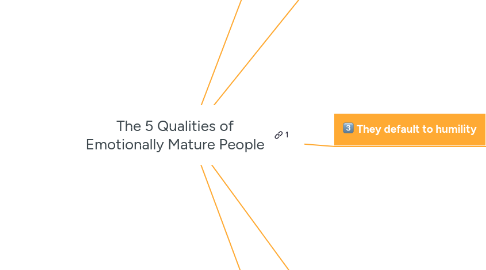
The 5 Qualities of Emotionally Mature People
von Danny Forest
1. They don’t run away
1.1. When we are facing a challenge, emotions make you want to escape. Resist that urge
1.2. Sit with your pain instead of running away and hiding.
1.3. Stay with the discomfort until you are able to identify their emotions.
1.4. Briefly pausing as your impulses come up, and choose the thoughts that follow those impulses.
1.5. Act on your feelings instead of getting hijacked by them and reacting to them
2. They are committed to finding emotional clarity
2.1. Psychologists call the skill of labeling our own feelings correctly emotional clarity.
2.2. While we have a talent for it in our early years, we might lose this skill and never get it back.
2.3. Refuse to settle for anything less than knowing what they feel.
2.4. Wade through the thick of discomfort until you emerge with real answers you can process.
3. They default to humility
3.1. Don't be stubborn and don’t insist on being right after you find out you are wrong
3.2. Have a sense of pragmatism — don’t take bad events personally
3.3. Have a sense of realism — don’t think others hurt you intentionally, and don’t assume you know what their intentions are.
3.4. Even if you stand to be humiliated, speak your truth to the best of your ability.
3.5. Be willing to talk and have empathy with yourself and others
4. They maintain a sense of self-respect
4.1. Know your values and boundaries and defend them
4.2. Dig into your psyche and uncover something you can proudly and shamelessly hold up in the world.
4.3. Think about your pillars of self-worth often and make an effort to maintain them as best as you can.
5. They take responsibility
5.1. Know the difference between taking responsibility and assigning blame
5.2. Influence what you can, accept what you can’t, and learn to recognize the difference.
5.3. See the big picture at all times
5.4. Always ask, “What else could I try?” and even if the answer is “Nothing,” maintain a sense of awareness that you'll soon have to ask it again.
5.5. Practice emotional tolerance until you find emotional clarity.
5.6. Remember that you decide what to think of, feel about, and do with situations.


