

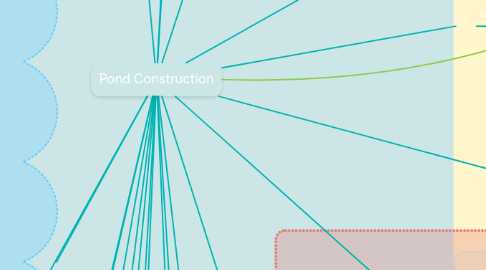
1. SUPPORTS Support can be define in many ways such as fund, powerman and also machinery from Governments or NGOs.
2. Important to get know the social and economic background of the area and understand the culture and traditions,particularly idea and beliefs locally asscioated with aquaculture practices.
3. Topography
3.1. Factors :
3.1.1. Site suitability
3.1.2. slope assessment
3.1.3. transek
3.1.4. land transition process
3.2. flat or slightly sloping land use
3.2.1. gravity assistance can be filled
3.2.2. dried with the aid of gravity
3.2.3. machinery's use for building pound
3.2.4. requires higher pool limits for flood protection
3.3. How to overcome steeper farm site, or if the gradient is irregular?
3.3.1. good pool size and alignment
3.3.2. efficient construction
3.3.3. good access
3.3.4. effective water supply and drainage.
3.4. have a good source of water in and out of the pool
3.5. flat and flooded area
3.5.1. requires higher pool limits for flood protection
4. Power supply
4.1. Various of power sources can apply as water movement in aquaculture farm
4.2. Power Sources
4.2.1. Gravity
4.2.1.1. the most ideal but it needs to depend on the topography of the location
4.2.2. 2. Wind
4.2.2.1. depend on shape of pond and its topography
4.2.3. 3. Electricity
4.2.3.1. the easiest to build
4.2.4. 4. Petrol and diesel fuel
4.2.4.1. usually act as back up energy
4.2.5. Wood
4.2.5.1. act as alternative source
4.3. Most farms use electric and fuels pumps
4.3.1. to supply water to the pond or dry the pond during the harvesting process
4.4. Most suitable power source depends on the availability of equipment, unit power costs, site characteristics and water supply.
5. improper site selection may leads to:
5.1. 1. difficulties in holding water in the pond
5.2. 2. Dike erosion
5.3. 3. Low productivity of the pond
5.4. 4. inability to drain water completely
5.5. 5. difficulties in harvesting
6. Layout
6.1. The site can be used optimally
6.2. water from one pool does not enter another pool to prevent infection
6.3. The entrance door is opposite the exit door. The water that comes out does not re-enter the pool.
6.4. Facilitate the work of feeding livestock.
7. Social and economi Factors.
7.1. The social fabric, market, and its structure, services directly or indirectly linked with aquaculture sector such as transportation, storage, wholesale market aspects etc. Are to be considered.
7.2. The land identified for farm should be wihout legal issue and fish farming should be accepted by the local people.
8. EQUIPMENT & FACILITY REQUIREMENT
8.1. Power supply
8.2. Road & access path
8.3. Accommodation for staffs
8.4. Predator protection - fencing etc.
8.5. Storage facilities
8.6. Nets
8.7. Water quality monitoring equipment
8.8. Transportation
9. Drying Process
9.1. Drying the pond around 2 weeks - To removed the predators in the pond. - During the raining seasons, the pond should be dry up more often.
9.2. Using the sunlight can break down the organic matter such as prawn feed, excretion, plankton and dead bodies.
10. Waste dumping area
10.1. Should provide 5-10% of the area for dumping of the wastes and must be collected carefully and dumped into this area without discharging to nearby areas, which will contaminate the natural resources.
11. Proximity to Markets, Support and Infrastructure
11.1. MARKETS. The distance from the pond and the markets must not far and reachable in a period of time so that the freshness of the product can last long.
11.2. INFRASTRUCTURE To achieve a succesful pond the infrastructure of the pond must be sufficient as the product must be cared at its finest. For example feeding machine and automated water changer.
12. more secure
13. Soil Characteristic
13.1. Site evaluation have to be perform by taking soil samples at a depth of 1 m deeper than the depth of the pond to be excavated.
13.2. Avoid flooded and saturated areas
13.3. Ideally, the site should have the shape possible to build the pool in the proper shape.
13.3.1. Rectangular pool are more effective to operate.
13.3.2. Irregular shape are difficult for the farmer to operate.
13.4. Water pH between 6.5 - 8.5
13.4.1. If the pH is lower than 6, its means that the pond is acidic & should to give the lime.
13.5. avoid acidic sulfate soils (<pH 4.5)
13.5.1. This type of soil is more acidic and have high concentration of manganese soluble iron and aluminum.
13.5.2. use pump electric to active the water operation
13.6. Has good water retention characteristic
13.6.1. soil composed of mud or clay, or a mixture with a small amount of sand
13.7. Unsuitable soil
13.7.1. Peat soil
13.7.2. Very sandy or composed of a mixture of gravel and sand
13.8. Site that contains high silica in the soil is not suitable to build cement pool
13.9. Suitable soil: high permeable soil (silt / clay / silt + clay) *** Clay > 60% is not suitable to be used***
14. Source of water
14.1. giant prawn breeding from post larva to market size: using fresh water
14.2. salinity level: 0-4 ppt (tolerable up to 10 ppt)
14.3. quantity of fresh water depends on:
14.3.1. operation scale
14.4. type of management :
14.4.1. direct drainage system: requires water in large amounts
14.4.1.1. Locations that only have access to groundwater resources such as rivers and lakes will be the suitable areas for aquaculture project sites
14.4.2. recycling flow system
14.5. location selection
14.5.1. have access to water resources of land surfaces
14.5.1.1. examples: rivers, lakes, reservoirs, canals irrigation and others
14.6. quality of water
14.6.1. optimal giant prawn breeding
14.6.2. reach the level recommended by aquaculture experts
14.6.3. free from predators
14.6.4. proper screening process
14.7. 4 major needs
14.7.1. to fill up the pond
14.7.2. to substitute water loss due to water leakage and evaporation
14.7.3. to replace water
14.7.4. act as emergency
15. ground surface water
15.1. rivers, lakes, reservoirs and irrigation canals (as a source of water)
15.2. filtering water supply
15.2.1. helps reduce the early entry of predators
15.2.2. unable to clean chemical water or water containing disease organisms
15.2.2.1. how to overcome the problems? :
15.2.2.2. build a farm near the waterfall : carry water from distant and unpolluted water catchments or under reservoir dams
15.2.2.3. Select the stratified part of the epilimnion, at a depth of 0 - 10 m.
16. underground water
16.1. low amount of predators
16.2. high quality of chemical substances and microbiology
16.3. purposes of water
16.3.1. compensating for water loss due to leaks and evaporation
16.3.2. water exchange
16.3.3. immediate drying
16.3.4. the quality of chemicals, microbiology and predators is poor.
16.4. the water source at the site is also determined by the pattern of rainfall reception
16.5. filling ponds
16.6. help obtain sufficient water resources to replace/exceed its evaporation and absorption losses.
16.7. Groundwater resources are better than ground surface water because the quality of chemicals, microbiology and predators is less.
17. power supply
17.1. wood
17.2. water
17.3. wind
17.4. electric
17.4.1. light up the lamp
17.4.2. water lake operation
17.4.3. tools for making the food
17.5. petrol and fuel
17.5.1. to active water operation
18. source of water
18.1. freshwater -salinity level (0-4ppt)
18.2. quantity of water based on - direct waterflow & recycle waterflow
18.3. direct waterflow - need more water
18.4. but the process of filtering the water:
18.4.1. cannot clean the water from chemistry substances or ilness organism
18.5. surface water
18.5.1. •Ex : river, lake, resevoir and irrigation
18.5.2. filter water : can prevent from predator
18.5.3. choose the parts of surface water : "berstarta dari epilimnion
18.5.4. depth : 0-10m
18.6. 1) fill the water into the pond
18.7. under groundwater
18.7.1. because chemistry substances, microbology and predator are decrease
18.7.1.1. 2) substitute the lost of water because of :
18.7.1.1.1. leaking
18.7.1.1.2. evaporation
18.7.1.1.3. change to new water
18.7.2. there are 4 main of water
18.7.3. need record the level of rain water
18.7.3.1. to get enough source of water
19. topography
19.1. choose suitable base
19.2. factors:
19.2.1. availability of slope
19.2.2. process of transition of soil
19.2.3. transek
19.3. important to minimum the quantity of soil during pond construction
19.4. suitable soil
19.4.1. flat land
19.4.2. a bit inclined
19.5. suitable base
19.5.1. slope 2% ( 2m-100m)
19.5.2. gravity assistance can be filled
19.5.2.1. by natural
19.5.2.2. by dam
19.5.2.3. drying by assistance of gravity
19.6. for base more steeper or gradient is irregular:
19.6.1. size and pond allignment in efficient
19.6.2. good in access and have effective source of water
19.6.3. have source of water (in and out) effectively
19.7. certain base
19.7.1. pond that have dig in flat land
19.7.1.1. effect : flood
19.7.2. need higher pond barrier to prevent from flood
20. soil characteristics
20.1. site evaluation based on taking the soil sample
20.2. depth : 1m (more deeper than the depth of pond)
20.3. sample of soil:
20.3.1. to know the type of soil
20.3.2. knows the contents of chemistry substances
20.4. if have stone or tree stump should consider the costs of cleaning
20.5. prevent choose the area:
20.5.1. high chance of flood
20.5.2. difficult to construct the pond
20.6. unorganised structure of pond difficult to handle
20.6.1. need rectangle shape
20.7. farm site have fertile soil:
20.7.1. less cost of fertilizer
20.8. prevent from soil sulphate of acid
20.8.1. ex: pH <4.5
20.8.2. contain high in manganate and aluminium
20.9. should pH ( 6.5-8.5)
20.10. pond should contruct in good soil characteristic
20.11. soil characteristic very specific and need advice from land expert
20.12. not suitable for base of pond
20.12.1. sandy or contain mixture of gravel and sand
20.13. have good characteristic of maintain the water in pond
20.13.1. soil contain:
20.13.1.1. mud
20.13.1.2. clay
20.13.1.3. mixture of small of sandy
20.14. peat soil not suitable
20.15. clay soil ( <60%)
20.15.1. to prevent from expand and cracked during dry season
20.15.1.1. high cost needed
21. Pond Design
21.1. shape size pond
21.1.1. suitable shape: rectangle
21.1.2. ideal pool: 30 m width, length: depends largely on the topography of the site and partly on the size of the pond and the selected farm layout
21.2. dept pond
21.2.1. tropical area
21.2.1.1. 0.9 meter dept ( min:0.7 m, max 1.2 m)
21.2.2. cool area
21.2.2.1. (average 1.2-1.4 m)
21.2.3. characteristic of bottom pond
21.2.3.1. smooth, no rocks or tree stumps in it that will damage the net
21.2.3.2. gradual and smooth slope from the inlet to the outlet- prevent the shrimp from getting stranded and dying.