

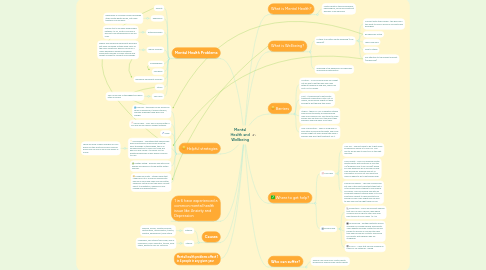
1. Mental Health Problems
1.1. Anxiety
1.2. Depression
1.2.1. Depression is commonly found alongside other mental health issues, but easily treatable if found early.
1.3. Eating Disorders
1.3.1. Usually start in younger people aged between 16-20, mostly common in girls but 25% experiencing an ED are male.
1.4. Bipolar Disorder
1.4.1. Bipolar and Borderline personality disorders get easily confused as they share many of the same symptoms. Bipolar is more of a manic depression whereas borderline personality disorder is mainly intense and abrupt moment to moment mood swings
1.5. Schizophrenia
1.6. Psychosis
1.7. Borderline Personality Disorder
1.8. Stress
1.9. Self Harm
1.9.1. The UK has one of the highest self harm rates in Europe
2. Helpful strategies
2.1. Exercise - this gives you an enormous sense of wellbeing, it relieves tension, releases endorphins and gives you energy!
2.2. Ask for help - You'll feel so much better if you feel like you have a support network
2.3. Sleep
2.4. Mindfulness - Something that people have been practicing for many years since the early teachings of the Buddha, this is an amazing practice to clear your mind and help you feel calmer. It involves a lot of breathing exercises as well which is proven to calm
2.4.1. There are loads of apps available on your phone for this practice and also loads of books you can find in your local library or online.
2.5. Healthy eating - provides you with more energy and helps you to feel better within yourself.
2.6. Cuddle your pets - studies show that cuddling a cat or a dog can significantly help your mood and make you feel better, especially cats purrs as they have a similar effect to meditation, making you feel relaxed and relieving stress
3. 1 in 6 have experienced a common mental health issue like Anxiety and Depression
4. Causes
4.1. external
4.1.1. Bullying, money, substance abuse, relationships, discrimination, trauma, lifestyle, bereavement, work stress
4.2. internal
4.2.1. Loneliness, self esteem/self image, lack of confidence, brain chemistry, trauma, work stress, having to care for someone
5. Mental health problems affect 1 in 4 people in any given year
6. What is Mental Health?
6.1. Mental health is the psychological, physiological, social and emotional wellness of an individual
7. What is Wellbeing?
7.1. 5 Steps to a better mental wellbeing (NHS website)
7.1.1. Connect with other people - this gives you the ability to build a sense of self worth and belonging
7.1.2. Be physically active
7.1.3. Learn new skills
7.1.4. Give to others
7.1.5. Pay attention to the present moment (mindfulness)
7.2. Wellbeing is the experience of happiness and personal satisfaction
8. Barriers
8.1. Location - If you're living rurally you might not be able to get the help you need without travelling a long way, which can cost a lot of money.
8.2. Cost - It's expensive to get private treatment! Medication costs a lot of money, some people might not have enough to get the help they need.
8.3. Stigma - there is a LOT of negative stigma around mental health, including around men and in general life. This tends to make people feel like they can't talk about their problems and hide away from them.
8.4. Lack of education - There is a big lack of education around mental health, and some people might not even realise they have a problem and won't get treatment for it.
9. Where to get help?
9.1. Local help
9.1.1. Your GP! - The first place to go to get some professional advice is to your GP. Your doctor will be able to point you in the right direction.
9.1.2. Mind Charity - This is an amazing mental health charity with locations all over the UK (probably local to you as well) where you can physically go in and ask for help. They provide an amazing amount of information if you're not sure what you need or where to go to get proper help!
9.1.3. Friends and Family! - This one sounds basic but one of the most important steps that a lot of people miss is talking to your friends and family. This can provide you with an immediate support network even if it's only emotional support to help kickstart your search for help. They might even be able to help you find the right thing for you.
9.2. General help
9.2.1. Samaritans! - This is an excellent helpline that you can call 24 hours a day where someone will be able to listen and offer help tailored to your needs. 116 123
9.2.2. Young minds - another fantastic service available for younger people and parents. Their website provides content for young people to read up on and find the help they need as well as contacts and advice for parents with children who are struggling.
9.2.3. SHOUT - a free text service available on nearly all UK networks - 85258