Model Code of Ethics
von Maggie Taipe
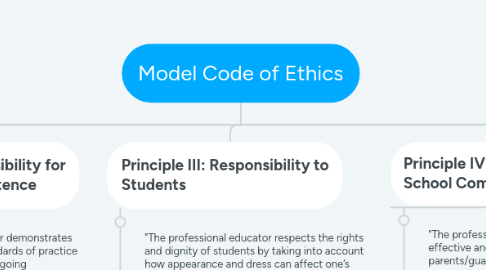
1. Principle I: Responsibility to the Profession
1.1. "The professional educator promotes and advances the profession within and beyond the school community by Advocating for adequate resources and facilities to ensure equitable opportunities for all students. "(Model of Code of Ethics for Educator, p,1, ). In this moment of the country's history, it is more important than ever to teach with culturally relevant materials and address racial, gender, cultural diversity, and equity in the classroom to ensure we are serving all students fairly. It will help avoid behavior issues due to the students' sense of the school no serving for their real life.
2. Principle II: Responsibility for Professional Competence
2.1. "The professional educator demonstrates commitment to high standards of practice through committing to ongoing professional learning." (Model of Code of Ethics for Educator, p,2) The nowadays generation of students in the visual and media age challenges the teacher to keep up with the teacher's professional development. There is nothing more unappealing for a student to be in a class where a teacher only talks for hours and use old materials for each lesson.
3. Principle III: Responsibility to Students
3.1. "The professional educator respects the rights and dignity of students by taking into account how appearance and dress can affect one’s interactions and relationships with students." (Model of Code of Ethics for Educator, p,3). It is crucial to keep in mind that a teacher is a role model in and out of the classroom how a teacher dress could affect the class environment. If a teacher comes to a school dressing inappropriately, it shows a lack of respect. Also, it is vital to be culturally sensitive when a teacher picks outfits to wear at school. This matter is no longer what a teacher wants to dress; it is the most appropriate way to keep students focused on what a teacher is teaching and not what he/she is wearing.
4. Principle IV: Responsibility to the School Community
4.1. "The professional educator promotes effective and appropriate relationships with parents/guardians by communicating with parents/guardians in a timely and respectful manner that represents the students’ best interests." (Model of Code of Ethics for Educator, p,4). Communicating with the students' parents or guardians is fundamental for their kids' education. Using the right way of communicating might decides if the parents become teacher's allies or enemies. Being respectful, showing interest in their kids as individuals, and focus on the students' positive outcomes instead of the negative ones create the perfect mix for the students' success.
5. Principle V: Responsible and Ethical Use of Technology
5.1. "The professional educator uses technology in a responsible manner by monitoring to the extent practical and appropriately reporting information concerning possible cyber bullying incidents and their potential impact on the student learning environment ." (Model of Code of Ethics for Educator, p,5). Cyberbullying is real and has devastating effects on a teenager, like depression, anger, or even suicide. For that reason, a teacher must be vigilant now than ever, especially in our new normal where we will be in the virtual classrooms where the teacher does not have the control she/he has in a regular class. Modify the class rules to the virtual level is crucial to prevent cyberbullying and offer support to the victims taking the proper actions to protect them.


