


1. 1-Sentence-Summary:
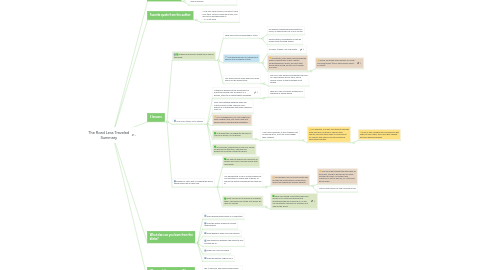
1.1. The Road Less Traveled is a spiritual classic, combining scientific and religious views to help you grow by confronting and solving your problems through discipline, love and grace.
2. Favorite quote from the author:
2.1. "Until you value yourself, you won't value your time. Until you value your time, you will not do anything with it." - M. Scott Peck
3. 3 lessons:
3.1. Always be willing to update your view of the world.
3.1.1. Peck asks us to be dedicated to truth.
3.1.1.1. He doesn’t emphasize being honest so much, as that’s often out of our control.
3.1.1.2. What matters, he suggests is that we remain open to being wrong.
3.1.2. How willing are you to change your opinion at a moment’s notice?
3.1.2.1. It’s hard. It takes a lot of humility.
3.1.2.2. Sometimes, even when we’re presented with an opportunity to get a better understanding of reality, like facts that prove we’re wrong, we still can’t change our mind.
3.1.2.2.1. Worse, we might even reaffirm our rusty and false beliefs (this is the backfire effect in action).
3.1.3. You don’t have to cheer when you learn you’re on the wrong track.
3.1.3.1. But if you can pause and entertain the idea of a new opinion at any time, you’re already closer to the truth than most people.
3.2. Love is an action, not a feeling.
3.2.1. Cathexis is defined as the investment of emotional energy into an object or a person, often to an extent that’s unhealthy.
3.2.1.1. Think of it like a romantic obsession or overdose of sexual desire.
3.2.2. Peck says cathexis happens when we intently focus on the “falling in love” aspect of a relationship that often happens early on.
3.2.3. As a consequence, our love might burn with a bright flame, but soon fizzle into sparks before extinguishing altogether.
3.2.4. To prevent this, he suggests we think of love as an action, not a feeling.
3.2.4.1. If our love is genuine, it won’t require lots of feelings at all, since it’s much bigger than cathexis.
3.2.4.1.1. For example, in a well-functioning marriage both partners continue to choose their spouse, because they made a commitment to support that person and strive towards their goals together.
3.2.5. In this sense, showing your love is as simple as giving your attention, listening and helping your partner reach their goals.
3.3. Religion is just a way of viewing the world, which means we all have one.
3.3.1. We need to expand our definition of religion and uses it synonymously with ‘worldview.’
3.3.2. Our perspective of life is mostly shaped by our education in school and at home, as well as the family environment we grow up in.
3.3.2.1. For example, one of Peck’s clients was brought up by extremely conservative, devout and physically abusive parents.
3.3.2.1.1. As a result he thought the world was an evil place, trying to punish him for every mistake he made. His religion was “everyone is out to get me, so I must play by the rules.”
3.3.2.1.2. Notice how there’s no God involved in this.
3.3.3. What can we do to improve our religion, then? This goes back to the first lesson: Be open to change.
3.3.3.1. Peck says taking a scientist’s approach allows us to continue exploring and questioning the world around us, so we can constantly improve our opinions and view of the world.