


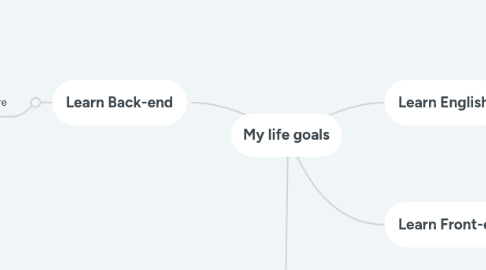
1. Learn Back-end
1.1. ASP.NET Core
1.1.1. General Development Skills
1.1.1.1. GIT
1.1.1.2. HTTP/HTTPS protocol
1.1.1.3. dotnet CLI
1.1.1.4. Data Structures and Algorithms
1.1.2. C#
1.1.2.1. C# 9
1.1.2.2. .NET 5
1.1.3. SQL Fundamentals
1.1.3.1. Design and Syntax
1.1.3.2. Stored Procedures
1.1.3.3. Constraints
1.1.3.4. Triggers
1.1.4. Core Basics
1.1.4.1. MVC
1.1.4.2. REST
1.1.4.3. Razor Pages
1.1.4.4. Razor Components
1.1.4.5. Middlewares
1.1.4.6. Filters and Attributes
1.1.4.7. Application Settings and Configurations
1.1.4.8. Authentication and Authorization
1.1.5. SOLID
1.1.5.1. Single Responsability Principle
1.1.5.2. Open-Closed Principle
1.1.5.3. Liskov Substitution Principle
1.1.5.4. Interface Segregation Principle
1.1.5.5. Dependency Inversion Principle
1.1.6. ORM
1.1.6.1. Entity Framework Core
1.1.6.1.1. Basics
1.1.6.1.2. Code First + Migrations
1.1.6.1.3. Change Tracker API
1.1.6.1.4. Lazy Loading, Eager Loading and Explicit Loading
1.1.6.1.5. TPT, TPH
1.1.6.2. Dapper
1.1.6.3. NHibernate
1.1.7. Dependency Injection
1.1.7.1. DI Containers
1.1.7.1.1. Microsoft.Extensions.DependencyInjection
1.1.7.1.2. AutoFac
1.1.7.1.3. Ninject
1.1.7.1.4. Castle Windsor
1.1.7.1.5. Simple Injector
1.1.7.2. Life Cycles
1.1.7.2.1. Scoped
1.1.7.2.2. Transient
1.1.7.2.3. Singleton
1.1.7.3. Scrutor
1.1.8. Databases
1.1.8.1. Relational
1.1.8.1.1. SQL Server
1.1.8.1.2. PostgresSQL
1.1.8.1.3. MariaDB
1.1.8.1.4. MySQL
1.1.8.2. Cloud Databases
1.1.8.2.1. Azure CosmosDB
1.1.8.2.2. Amazon DynamoDB
1.1.8.3. Search Engines
1.1.8.3.1. ElasticSearch
1.1.8.3.2. Solr
1.1.8.3.3. Sphinx
1.1.8.4. NoSQL
1.1.8.4.1. Redis
1.1.8.4.2. MongoDB
1.1.8.4.3. LiteDB
1.1.8.4.4. Apache Cassandra
1.1.8.4.5. RavenDB
1.1.8.4.6. CouchDB
1.1.9. Caching
1.1.9.1. Memory Cache
1.1.9.2. Distributed Cache
1.1.9.2.1. Redis
1.1.9.2.2. Memcached
1.1.9.3. Entity Framework Cache
1.1.10. Log Frameworks
1.1.10.1. Serilog
1.1.10.2. NLog
1.1.10.3. Log Mannagement System
1.1.10.3.1. ELK Stack
1.1.10.3.2. Sentry.io
1.1.10.3.3. loggly.com
1.1.10.3.4. elmah.io
1.1.11. API Clients and Communications
1.1.11.1. REST
1.1.11.1.1. OData
1.1.11.1.2. Sieve
1.1.11.2. gRPC
1.1.11.3. GraphQL
1.1.11.3.1. HotChocolate
1.1.11.3.2. GraphQL-dotnet
1.1.12. Real Time Communication
1.1.12.1. SignalR Core
1.1.12.2. Web Sockets
1.1.13. Object Mapping
1.1.13.1. AutoMapper
1.1.13.2. Mapster
1.1.13.3. ExpressMapper
1.1.13.4. AgileMapper
1.1.14. Task Scheduling
1.1.14.1. Coravel
1.1.14.2. HangFire
1.1.14.3. Native BackgroundService
1.1.14.4. Fluent Scheduler
1.1.15. Testing
1.1.15.1. Unit Testing
1.1.15.1.1. Frameworks
1.1.15.1.2. Mocking
1.1.15.1.3. Assertion
1.1.15.2. Integration Testing
1.1.15.2.1. WebApplicationFactory
1.1.15.2.2. TestServer
1.1.15.3. Behavior Testing
1.1.15.3.1. SpecFlow
1.1.15.3.2. BDDfy
1.1.15.3.3. LightBDD
1.1.15.4. E2E Testing
1.1.15.4.1. Selenium
1.1.15.4.2. Puppeteer Sharp
1.1.16. Micro-Services
1.1.16.1. Message-Broker
1.1.16.1.1. RabbitMQ
1.1.16.1.2. Apache Kafka
1.1.16.1.3. ActiveMQ
1.1.16.1.4. Azure Service Bus
1.1.16.1.5. NetMQ
1.1.16.2. Message-Bus
1.1.16.2.1. MassTransit
1.1.16.2.2. NServiceBus
1.1.16.2.3. EasyNetQ
1.1.16.2.4. CAP
1.1.16.3. API Gateway
1.1.16.3.1. Ocelot
1.1.16.4. Containerization
1.1.16.4.1. Docker
1.1.16.5. Orchestration
1.1.16.5.1. Kubernetes
1.1.16.5.2. Docker Swarm
1.1.16.6. Reverse Proxy
1.1.16.6.1. YARP
1.1.16.7. Others
1.1.16.7.1. Orleans
1.1.16.7.2. SteelToe
1.1.16.7.3. Dapr
1.1.16.7.4. Tye
1.1.17. Continuos Integration and Delivery
1.1.17.1. Github Actions
1.1.17.2. Azure Pipelines
1.1.17.3. Travis CI
1.1.17.4. Jenkins
1.1.17.5. Cricle CI
1.1.17.6. TeamCity
1.1.18. Design Patterns
1.1.18.1. CQRS
1.1.18.2. Decorator
1.1.18.3. Strategy
1.1.18.4. Builder
1.1.18.5. Singleton
1.1.18.6. Facade
1.1.19. Client-Side libraries
1.1.19.1. Blazor
1.1.20. Templates Engines
1.1.20.1. Razor
1.1.20.2. DotLiquid
1.1.20.3. Scriban
1.1.20.4. Fluid
1.1.21. Libraries
1.1.21.1. MediatR
1.1.21.2. FluentValidation
1.1.21.3. Polly
1.1.21.4. Benchmark.NET
1.1.21.5. NodaTime
1.1.21.6. GenFu
1.1.21.7. Swashbuckle
2. Internship
3. Learn English
3.1. A1 - Beginner
3.1.1. Adjetivos: Comuns e Demonstrativos
3.1.2. Advérbios de Frequência
3.1.3. Comparativo e Superlativo
3.1.4. ‘To be going to’ – frases básicas
3.1.5. Quantificadores: ‘How much’, ‘how many’ e ‘very’
3.1.6. Substantivos Incontáveis mais Comuns
3.1.7. Pedidos: ‘I’d like’
3.1.8. Imperativos: Positivos e Negativos
3.1.9. Intensificadores – Básico
3.1.10. Modais Básicos: ‘can’, ‘can’t’, ‘could’, ‘couldn’t’
3.1.11. Passado Simples do Verbo “to be”
3.1.12. Passado Simples
3.1.13. Adjetivos Possessivos
3.1.14. Possessivos
3.1.15. Preposições mais Comuns
3.1.16. Preposições de Lugar, incluindo in/on/at
3.1.17. Preposições de Tempo, incluindo in/on/at (simples)
3.1.18. Presente Contínuo
3.1.19. Presente Simples
3.1.20. Pronomes Pessoais
3.1.21. Perguntas
3.1.22. There is/are
3.1.23. Verbo to be, incluindo frases interrogativas e negativas
3.1.24. Verbo + Gerúndio ‘ing’: like/hate/love
3.1.25. Quantificadores: ‘How much’, ‘how many’ e ‘very’
3.2. A2 - Basic
3.2.1. Adjetivos – na forma comparativa utilizando ‘than’ e artigos definidos
3.2.2. Adjetivos – na forma superlativa utilizando artigos definidos
3.2.3. Frases Adverbiais de Tempo, Lugar e Frequência
3.2.4. Advérbios de Frequência
3.2.5. Artigos – com substantivos contáveis e incontáveis
3.2.6. Contáveis e Incontáveis: ’much’ e ‘many’
3.2.7. Tempo Futuro: ‘will’ e ‘going to’
3.2.8. Gerúndios
3.2.9. Imperativos
3.2.10. Modais – ‘can’ e ‘could’
3.2.11. Modais – ‘have to’
3.2.12. Modais – ‘should’
3.2.13. Passado Contínuo
3.2.14. Passado Simples
3.2.15. Phrasal Verbs mais Comuns
3.2.16. Possessivos – uso de ‘s, s’
3.2.17. Frases Preposicionais – lugar, tempo e movimento
3.2.18. Preposições de Tempo: on/in/at
3.2.19. Presente Contínuo
3.2.20. Presente Contínuo para falar de Futuro
3.2.21. Presente Perfeito
3.2.22. Frases Interrogativas
3.2.23. Verbo + Gerúndio -ing / Infinitivo: ‘like’, ’want’ – ‘would like’
3.2.24. Wh-questions no Passado
3.2.25. Condicional Zero
3.2.26. Primeira Condicional
3.2.27. Nível Intermediário – Nível B
3.3. B1 - Intermediate
3.3.1. Advérbios
3.3.2. Gama maior de Intensificadores – ‘too’, ‘enough’ e outros
3.3.3. Comparativos e Superlativos – completo
3.3.4. Tag Questions Complexas
3.3.5. Segunda Condicional
3.3.6. Terceira Condicional
3.3.7. Conectivos – expressões e palavras de causa e efeito, contraste etc.
3.3.8. Futuro Contínuo
3.3.9. Modais – ‘must’, ‘can’t’ dedução
3.3.10. Modais – ‘might’, ‘may’, ‘will’, ‘probably’
3.3.11. Modais – ‘should have’, ‘might have’, etc.
3.3.12. Modais: ‘must’, ‘have to’
3.3.13. Passado Contínuo
3.3.14. Passado Perfeito
3.3.15. Passado Simples
3.3.16. Termos no Tempo Passado
3.3.17. Phrasal Verbs, extendido
3.3.18. Presente Perfeito Contínuo
3.3.19. Presente Perfeito / Passado Simples – diferenças
3.3.20. Reported Speech ou Discurso Reportado (em uma ampla gama de tempos verbais)
3.3.21. Voz Passiva Simples
3.3.22. Wh- Questions no Passado
3.3.23. Previsões – ‘will’ e ‘going to’ (simples)
3.4. B2 - Post intermediate
3.4.1. Adjetivos e Advérbios
3.4.2. Futuro Contínuo
3.4.3. Futuro Perfeito
3.4.4. Futuro Perfeito Contínuo
3.4.5. Condicionais Mistas
3.4.6. Modais – ‘can’t have’, ‘needn’t have’
3.4.7. Modais de dedução e especulação
3.4.8. Tempos Verbais de Narrativa
3.4.9. Voz Passiva
3.4.10. Passado Perfeito
3.4.11. Passado Perfeito Contínuo
3.4.12. Phrasal Verbs, extendido
3.4.13. Relative Clauses
3.4.14. Reported Speech ou Discurso Reportado
3.4.15. Previsões – ‘will’ e ‘going to’
3.4.16. Desejos
3.4.17. Would para expresser hábitos no Passado
3.5. C1 - Advanced
3.5.1. Formas de Futuro (revisão)
3.5.2. Inversão com Adverbiais Negativos
3.5.3. Condicionais Mistas – nas formas passado, presente e futuro
3.5.4. Modais no Passado
3.5.5. Tempos Verbais de Narrativa – para experiência, incluindo voz passiva
3.5.6. Todas as formas de Voz Passiva
3.5.7. Phrasal verbs, especialmente separação
3.5.8. Arrependimentos – ‘Wish’/ ‘if only’