


1. 1-Sentence-Summary:
1.1. Breath is a fascinating and helpful guide to understanding the science of breathing, including how doing it slowly and through your nose is best for your lungs and body, and the many proven mental and physical benefits of being more mindful of how you inhale and exhale.
2. Favorite quote from the author:
2.1. "It turns out that when breathing at a normal rate, our lungs will absorb only about a quarter of the available oxygen in the air. The majority of that oxygen is exhaled back out. By taking longer breaths, we allow our lungs to soak up more in fewer breaths." - James Nestor
3. 3 lessons:
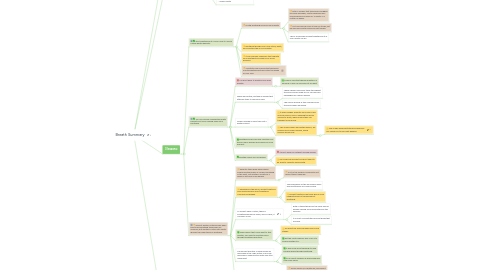
3.1. Start breathing out of your nose to unlock natural health benefits.
3.1.1. Mouth breathing is bad for your health
3.1.1.1. After a surgery that temporarily plugged his nasal passages, Nestor experienced a blood pressure increase of 13 points in a matter of weeks.
3.1.1.2. Not only was he more at risk for stroke, but he also had a faster pulse and felt terrible.
3.1.1.3. This is an example of what breathing out of your mouth can do.
3.1.2. Breathing through your nose filters, heats, and moistens the air you breathe
3.1.3. It also releases chemicals that regulate your heartbeat and lower your blood pressure.
3.1.4. Scientists have learned that excessive mouth breathing actually alters the shape of your face.
3.2. You can receive unexpected health benefits just from slowing down your breathing.
3.2.1. You don’t have to breathe very deep breaths.
3.2.1.1. Science says that shallow breaths 5.5 seconds in and 5.5 seconds out are best.
3.2.2. When we breathe, we take in oxygen that attaches itself to red blood cells.
3.2.2.1. These oxygen molecules travel throughout the body and are used by our cells and are exchanged for carbon dioxide.
3.2.2.2. The carbon dioxide is then released from the body when we exhale.
3.2.3. Carbon dioxide is more than just a waste product.
3.2.3.1. It helps oxygen separate from blood cells and also plays a role in signaling the blood vessels to dilate, which means they can transport more blood.
3.2.3.2. This means when we breathe heavily, we release more carbon dioxide, which reduces blood flow.
3.2.3.2.1. This is why hyperventilating and exercise can cause you to feel light-headed.
3.2.4. Breathing slowly will help maintain your blood carbon dioxide levels which is more efficient.
3.2.5. Breathe slowly and less deeply
3.2.5.1. It won't leave you without enough oxygen.
3.2.5.2. Our lungs are efficient and don’t need to be filled to capacity each breath.
3.3. Ancient Eastern cultures have been practicing breathing techniques for millennia, but Western culture still mostly ignores the importance of breathing.
3.3.1. Recently there have been people embracing the power of mindful breathing in the West, but Western society as a whole is still very much behind.
3.3.1.1. A lot of the medical community just doesn’t take it seriously.
3.3.2. Elsewhere in the world, ancient traditions have made wisdom about breathing common knowledge.
3.3.2.1. Some examples of this are Swami Rama and practitioners of Tummo show.
3.3.2.2. Ancient traditions like these give a more integrated way of thinking about breathing.
3.3.3. In ancient Indian culture, there is something known as prana, and in China, it is known as ch’i.
3.3.3.1. Both of these things are the same idea of energy swirling around everything in the universe.
3.3.3.2. It is most concentrated around things that are alive.
3.3.4. They believe that if you want to stay healthy, you need to maintain prana through traditional practices.
3.3.4.1. Acupuncture and yoga keep prana flow steady.
3.3.4.2. But the most powerful way of all is to simply breathe it in.
3.3.5. The ancient practice of yoga known as described in the Yoga Sutras of 500 BC describes a yoga practice with very little movement.
3.3.5.1. It was more about keeping still and building prana through breathing.
3.3.5.2. It’s all about building up prana gradually over many years.
3.3.6. With how fundamental this knowledge is in many Eastern cultures, it’s surprising that modern science cares so little about something as important as breathing.
3.3.6.1. As we advance in healthcare, we haven’t advanced in breathing techniques, which is a shame
3.3.6.2. The right breathing technique t can do everything from alter body temperature, heart rate, and blood pressure, to aid in fighting infection.