


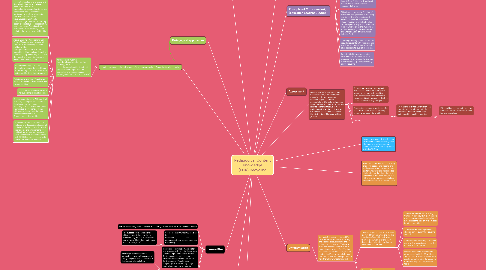
1. Learning is enhanced through a variet of teaching approaches ( Education Scotland , online)
1.1. My lesson will involve : Interdisciplinary Learning , Active learning ,Use of technology,collaborative learning all of which according to the CfEs principle and practice enhance learning (Education Scotland , online )
1.1.1. Interdisciplinary learning - Interdisciplinary learning, in its best form, delivers a vibrant and self-motivating learning environment that is both pleasant and relevant. It leads to a better, more comprehensive comprehension of key concepts as well as enhanced proficiency in applying information and abilities in transferable ways(Education Scotland , 2012). Although the main focus of my lesson is Social studies , aspects of my lesson also hit on Es and Os from Expressive Arts and Literacy . I also included the classes topic within this lesso.
1.1.2. Active Learning - According to Dales Cone of Experience students recall around 10% of what they read The children will be sorting the rubbish out into the correct bins , there is also a Recycling station tuff tray where they sort out all the rubbish and also interactive ppt games based on Recycling .
1.1.3. Use of technology- I will use technology such as the smart board to present my ppt, show the children videos and for the interactive ppt.
1.1.4. Collaborative learning - The children work as a class to sort the rubbish into the correct bins.
1.1.5. Child centred - built on children’s intrigue from previous lessons .
1.1.6. Social constructionism- Although I will be mainly leading the conversations the children are very much encouraged to share ideas with peers , have group discussions . - In line with Vugitskys theory of the more knowledgable other and Bruners theory of Scaffolfing .
1.1.7. In line with GIRFECS elements of Inclusion and Respect , my lesson will include whole class discussions and peer discussions which means every child will get a chance to answer or share their ideas which corresponds with GIRFEC as it means every child should feel heard and included .
2. What is PCK ?
2.1. PCK is the mixing of content and pedagogy into a concept of how specific topics, issues, or challenges are arranged, articulated, and tailored to learners' various interests and skills. It also involves a comprehension of what makes learning specific topics easy or difficult, along with knowledge of the subject's numerous learning hurdles(Shulman , 1986)
3. Pedagogical approaches
4. Lesson Plan
4.1. LI - We are learning about how we can encourage others to take care of their environmen
4.2. Sc - I can identify what materials go in which bin . / I can encourage others to use resources responsibly .
4.2.1. The success criteria will help the children know if they have been successful by the end of the lesson and in turn will help them understand the LI (Clarke ,2005)
4.3. Resources - Recyclable materials for the sorting activity and for the posters , foil tins to put some of the rubbish for the posters in so it is evenly distributed to each child , A4 paper for the posters , Pencils , pens ,crayons ,glue ,scissors ,play dough mats ,play dough , smart boards
4.3.1. Next steps after this lesson is completed - take another aspect of saving the planet and do a lesson on thsi for example , pollution
4.4. Links to
5. Links to previous learning
5.1. Learners had previously touched upon Climate change and the things we could do to stop it such as Recycling , however , they never went into depth that’s why I choose one aspect to go into depth about
5.2. One of the most significant factors in learning is prior knowledge (Hattie and Yates , 2014)
5.3. It is crucial to include prior knowledge at the start of a new lesson as although children may have the necessary prior knowledge , they may not be able to relate it to new content which is why urging children to recall prior knowledge is crucial (Howard -Jon’s et al ,2018)
6. Health and safety :
6.1. Explain to the children they must be careful with the scissors
6.1.1. SA also presnt to ensure children are using the scissors correctly .
6.1.1.1. Once the children have split the rubbish into the bins ensure taht these are put in a place where the children will not trip on them
7. Poster task : The P2s will be creating their own posters and slogans and will be encouraged to draw on their posters , however this would be too challenging for the L1s so they are given sheets that have ‘Recycle me ‘ at the top and they are just sticking recyclable materials onto their poster .
8. Inspired by a range of stimuli , I can express and communicate my ideas ,thoughts and feelings through activities within art and design.EXA 0-05/EXA 2-05a
9. Assessment is the process through which teachers , students or peers generate , interpret and apply evidence regarding student accomplishment to make judgements about next steps in education that are likely to be more effective or more well founded , than the choices they would have taken in the absence of the elicited data ( Black and William ,2009 )
9.1. Formative Assessment strategies in my lesson :Questioning throughout lesson , in my main task the children must correctly sort the rubbish into the correct bins if they can do this this shows planned learning took place.
9.2. Summarise assessment strategies :Cut and stick to show they can correctly identify what goes into what bin ,
9.2.1. SA- Cut and stick task , if children can correctly sort the pictures into the correct bin then this shows they understood the teaching practice
9.2.1.1. If the children can correctly sort the rubbish into then this shows planned learning took place
9.3. Century
10. Curriculum Knowldege
10.1. Experiences and Outcomes :
10.2. I can consider ways of looking after my school and community and can encourage others to care for the environment SOC 1-08a
10.3. Within real and imaginary situations , I share experiences and feelings , ideas and information in a way that communicates my message .LIT 0-02a
11. Principles of Curriculm design (Education Scotland , 2008)
11.1. Relevance- When attempting to engage learners, it is critical to relate learning experiences and material to the real world(McCrory ,2018) .In my lesson children are learning about Recycling as an aspect of ‘saving the planet’ , this is extremely relevant especially with COP 26 currently happening .
11.2. Personalisation and choice - The students had previously done a lesson on Climate change and they had asked if they could do another lesson which focussed on saving the planet so therefore it was their choice to do this lesson . Within this lesson I also have differnt finishing task stations for the children in which they can ‘choose’ what to do .
11.3. This also touches on the Principle of curriculum design aspect of including real life contexts for learning and building in what the children are already familiar with. It also touches on the aspect of Prgression within the Curriculum Design as the students as further developing their knowledge and understanding of ways we can help the Earth.
11.4. Challenge and Enjoyment-This lesson provides students with strategies and activities to discover new information at an appropriate level of challenge .
11.5. Breadth- Children are developing skills which are essential for both everyday life at home and within the school community through learning about Recycling .
12. Assessment
13. Differentiation
13.1. Cut and stick activity : P2s and P1s have the same task which is cutting and sticking the rubbish into the correct bins , however , P2s have a more challenging one as they have more pictures to sort . The P2s bins just say the words like Cans , plastics etc but the P1s may struggle to read this so their bins also have pictures to help them know what bin is which .
13.1.1. The finishing tasks also differ as there is a few differnt activities the children can choose from which will allow them to pick which ever one they deem to be challenging for them or most beneficial for them.
13.1.1.1. Station one - Room 3’s Recycling Centre - A tuff tray that is set out like a recycling centre and the children have to sort the rubbish in the middle into the correct bins
13.1.1.2. Station two - Colouring in sheet , children can colour in the Recycling symbol
13.1.1.3. Station three - Recycling interactive game on the smart board - Help the monster sort yeh rubbish
13.1.1.4. Level of one on one support with either myself or SLA - We will help and focus more on the children who usually struggle during the lesson to make sure they can complete the tasks
13.1.2. The use of the videos is also differentiation as it gives the children who learn better with visual aids and who struggle to sit and listen to information the opportunity to learn through videos .