


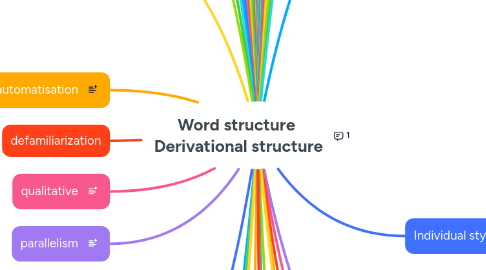
1. Logical
2. Quantative
3. Anticlimax
4. Periphrasis
4.1. figurative (metonymic, metaphoric)
4.2. Logical
5. figurative (metonymic, metaphoric)
6. Phonetic
6.1. Alliteration
6.2. Consonance
6.3. Assonanace
6.4. Rhyme
6.4.1. Incomplete rhyme
6.4.1.1. Vowel rhyme (flesh-fresh-press)
6.4.1.2. Consonat rhyme
6.4.2. Eye rhyme
6.4.3. Compound rhyme
6.5. Onomatoepia
6.5.1. Direct
6.5.2. Inderect
6.6. Paranomasia
6.7. Rythm
7. Consonance
8. Rhyme
8.1. Incomplete rhyme
8.1.1. Vowel rhyme (flesh-fresh-press)
8.1.2. Consonat rhyme
8.2. Eye rhyme
8.3. Compound rhyme
9. Vowel rhyme (flesh-fresh-press)
10. Eye rhyme
11. Onomatoepia
11.1. Direct
11.2. Inderect
12. Inderect
13. Rythm
14. Repetition
14.1. Anaphora
14.2. Epiphora
14.3. Framing
14.4. Catch repetition (anadiplosis)
14.5. Chain repetition
14.6. Ordinary repetition
14.7. Successive repetition
15. Epiphora
16. Catch repetition (anadiplosis)
17. Ordinary repetition
18. Parallel constructions
19. Inversion
19.1. Partial
19.2. Complete
20. Complete
21. Detachment
22. Polysyndeton
23. Attachment
24. One-member sentence
25. Graphical Expressive means
25.1. Graphon
25.1.1. supplies information about speakers's origin and background
25.1.2. Individualizes the characters's speech
25.2. graphical means of foregrounding
25.2.1. change of the type (italics, capitalization)
25.2.2. spacing of graphemes (hypenation, multiplication)
26. supplies information about speakers's origin and background
27. graphical means of foregrounding
27.1. change of the type (italics, capitalization)
27.2. spacing of graphemes (hypenation, multiplication)
28. spacing of graphemes (hypenation, multiplication)
29. Morphemic repetition
30. Lexical
30.1. Metaphor
30.1.1. Vivid
30.1.2. Dead (trite)
30.1.3. dormant
30.1.4. stock (шаблонная)
30.1.5. novel
31. Vivid
32. dormant
33. novel
34. Literary style
35. components of Ind. style
35.1. somposition of larger-than-sentence units
35.2. rhytm an melody of utterance
35.3. system of imagery
35.4. preference for definite stylistic devices and their relation with natural language
35.5. interdependence of the language means employed by the author and the media characteristic of the personages
36. rhytm an melody of utterance
37. preference for definite stylistic devices and their relation with natural language
38. Style VS. Dialect
38.1. Idiolect
38.2. Dialect
39. Dialect
40. Norm
41. Functional style=register=discourse
42. The language of belles-letters
42.1. geniune imagery achieved by purely linguistic devices
42.2. the use od words in contextua; meaning, greatly influnced by lexical environment
42.3. a vocabulray which will reflect author's personal evaluation of things or phenomena
42.4. individuality of selecting vocabulary and syntax
42.5. the introdaction of the typical features of colloquial language to a full degree (plays) a lesser one (emotive prose) or a slight degree, if any (poems)
43. the use od words in contextua; meaning, greatly influnced by lexical environment
44. individuality of selecting vocabulary and syntax
45. the language of publicistic literature
46. special political/economic terms
47. newspaper clishes
48. neologisms
49. verbal constructions (infinitive, participal, gerundial
50. logical sewuence of the utterance with clear indication of their interrelations and interdependence
51. sentence patterns (postulatory, argymantive, formulative)
52. use of foot-notes
53. Functions of standart language
53.1. intellectualisation
53.2. automatisation
53.3. foregrounding
53.3.1. defamiliarization
53.3.2. types of foregrounfing (Geoffrey)
53.3.2.1. qualitative
53.3.2.2. quantitative
53.3.2.2.1. parallelism
53.3.3. Convergence
54. automatisation
55. defamiliarization
56. qualitative
57. parallelism
58. defeated expectancy
58.1. levels
58.1.1. an unusual word against the background of a lexically homogeneous text
58.1.2. an authors coinage (неологизм)
58.1.3. a case of semantic incognuity or grammatical transposition (pun, paradox, oxymoron)
58.2. Zeugma
58.2.1. "You held your breath and the door for me."
58.3. Pun
58.4. Semi-marked structures
58.5. Coupling
58.6. Irradiation
59. an unusual word against the background of a lexically homogeneous text
60. a case of semantic incognuity or grammatical transposition (pun, paradox, oxymoron)
61. "You held your breath and the door for me."
62. Semi-marked structures
63. Irradiation
64. Stylistics
64.1. Expressive means and Stylistic Devices
64.1.1. Lexico-syntactical SDs
64.1.1.1. Antithesis
64.1.1.2. Climax
64.1.1.2.1. Emotive
64.1.1.2.2. Logical
64.1.1.2.3. Quantative
64.1.1.3. Anticlimax
64.1.1.4. Periphrasis
64.1.1.4.1. figurative (metonymic, metaphoric)
64.1.1.4.2. Logical
64.1.2. Phonetic
64.1.2.1. Alliteration
64.1.2.2. Consonance
64.1.2.3. Assonanace
64.1.2.4. Rhyme
64.1.2.4.1. Incomplete rhyme
64.1.2.4.2. Eye rhyme
64.1.2.4.3. Compound rhyme
64.1.2.5. Onomatoepia
64.1.2.5.1. Direct
64.1.2.5.2. Inderect
64.1.2.6. Paranomasia
64.1.2.7. Rythm
64.1.3. Syntactical
64.1.3.1. Repetition
64.1.3.1.1. Anaphora
64.1.3.1.2. Epiphora
64.1.3.1.3. Framing
64.1.3.1.4. Catch repetition (anadiplosis)
64.1.3.1.5. Chain repetition
64.1.3.1.6. Ordinary repetition
64.1.3.1.7. Successive repetition
64.1.3.2. Parallel constructions
64.1.3.3. Chiasmus
64.1.3.4. Inversion
64.1.3.4.1. Partial
64.1.3.4.2. Complete
64.1.3.5. Suspense
64.1.3.6. Detachment
64.1.3.7. Types of connection
64.1.3.7.1. Polysyndeton
64.1.3.7.2. Asyndeton
64.1.3.7.3. Attachment
64.1.3.8. Ellipsis
64.1.3.9. One-member sentence
64.1.3.10. Break (aposiopesis)
64.1.4. Graphical Expressive means
64.1.4.1. Graphon
64.1.4.1.1. supplies information about speakers's origin and background
64.1.4.1.2. Individualizes the characters's speech
64.1.4.2. graphical means of foregrounding
64.1.4.2.1. change of the type (italics, capitalization)
64.1.4.2.2. spacing of graphemes (hypenation, multiplication)
64.1.5. Morphemic
64.1.5.1. Morphemic repetition
64.1.5.2. extention of morpheme valency
64.1.6. Lexical
64.1.6.1. Metaphor
64.1.6.1.1. Vivid
64.1.6.1.2. Dead (trite)
64.1.6.1.3. dormant
64.1.6.1.4. stock (шаблонная)
64.1.6.1.5. novel
64.2. Style
64.2.1. Literary style
64.2.2. Individual style
64.2.2.1. components of Ind. style
64.2.2.1.1. somposition of larger-than-sentence units
64.2.2.1.2. rhytm an melody of utterance
64.2.2.1.3. system of imagery
64.2.2.1.4. preference for definite stylistic devices and their relation with natural language
64.2.2.1.5. interdependence of the language means employed by the author and the media characteristic of the personages
64.2.3. Style VS. Dialect
64.2.3.1. Idiolect
64.2.3.2. Dialect
64.2.4. Style VS. Norm
64.2.4.1. Norm
64.3. Functional style
64.3.1. Functional style=register=discourse
64.3.2. Types
64.3.2.1. The language of belles-letters
64.3.2.1.1. geniune imagery achieved by purely linguistic devices
64.3.2.1.2. the use od words in contextua; meaning, greatly influnced by lexical environment
64.3.2.1.3. a vocabulray which will reflect author's personal evaluation of things or phenomena
64.3.2.1.4. individuality of selecting vocabulary and syntax
64.3.2.1.5. the introdaction of the typical features of colloquial language to a full degree (plays) a lesser one (emotive prose) or a slight degree, if any (poems)
64.3.2.2. the language of publicistic literature
64.3.2.3. the language of newspapers
64.3.2.3.1. special political/economic terms
64.3.2.3.2. non-term vocab
64.3.2.3.3. newspaper clishes
64.3.2.3.4. abbreviations
64.3.2.3.5. neologisms
64.3.2.3.6. complex sentences with developed sustem of calsuses
64.3.2.3.7. verbal constructions (infinitive, participal, gerundial
64.3.2.4. the language of sientific prose
64.3.2.4.1. logical sewuence of the utterance with clear indication of their interrelations and interdependence
64.3.2.4.2. use of terms specific to each given branch of science
64.3.2.4.3. sentence patterns (postulatory, argymantive, formulative)
64.3.2.4.4. quotations and references
64.3.2.4.5. use of foot-notes
64.3.2.5. the language of official documents
64.4. Functions of standart language
64.4.1. intellectualisation
64.4.2. automatisation
64.4.3. foregrounding
64.4.3.1. defamiliarization
64.4.3.2. types of foregrounfing (Geoffrey)
64.4.3.2.1. qualitative
64.4.3.2.2. quantitative
64.4.3.3. Convergence
64.5. defeated expectancy
64.5.1. levels
64.5.1.1. an unusual word against the background of a lexically homogeneous text
64.5.1.2. an authors coinage (неологизм)
64.5.1.3. a case of semantic incognuity or grammatical transposition (pun, paradox, oxymoron)
64.5.2. Zeugma
64.5.2.1. "You held your breath and the door for me."
64.5.3. Pun
64.5.4. Semi-marked structures
64.5.5. Coupling
64.5.6. Irradiation
64.6. Semantic field
65. Expressive means and Stylistic Devices
65.1. Lexico-syntactical SDs
65.1.1. Antithesis
65.1.2. Climax
65.1.2.1. Emotive
65.1.2.2. Logical
65.1.2.3. Quantative
65.1.3. Anticlimax
65.1.4. Periphrasis
65.1.4.1. figurative (metonymic, metaphoric)
65.1.4.2. Logical
65.2. Phonetic
65.2.1. Alliteration
65.2.2. Consonance
65.2.3. Assonanace
65.2.4. Rhyme
65.2.4.1. Incomplete rhyme
65.2.4.1.1. Vowel rhyme (flesh-fresh-press)
65.2.4.1.2. Consonat rhyme
65.2.4.2. Eye rhyme
65.2.4.3. Compound rhyme
65.2.5. Onomatoepia
65.2.5.1. Direct
65.2.5.2. Inderect
65.2.6. Paranomasia
65.2.7. Rythm
65.3. Syntactical
65.3.1. Repetition
65.3.1.1. Anaphora
65.3.1.2. Epiphora
65.3.1.3. Framing
65.3.1.4. Catch repetition (anadiplosis)
65.3.1.5. Chain repetition
65.3.1.6. Ordinary repetition
65.3.1.7. Successive repetition
65.3.2. Parallel constructions
65.3.3. Chiasmus
65.3.4. Inversion
65.3.4.1. Partial
65.3.4.2. Complete
65.3.5. Suspense
65.3.6. Detachment
65.3.7. Types of connection
65.3.7.1. Polysyndeton
65.3.7.2. Asyndeton
65.3.7.3. Attachment
65.3.8. Ellipsis
65.3.9. One-member sentence
65.3.10. Break (aposiopesis)
65.4. Graphical Expressive means
65.4.1. Graphon
65.4.1.1. supplies information about speakers's origin and background
65.4.1.2. Individualizes the characters's speech
65.4.2. graphical means of foregrounding
65.4.2.1. change of the type (italics, capitalization)
65.4.2.2. spacing of graphemes (hypenation, multiplication)
65.5. Morphemic
65.5.1. Morphemic repetition
65.5.2. extention of morpheme valency
65.6. Lexical
65.6.1. Metaphor
65.6.1.1. Vivid
65.6.1.2. Dead (trite)
65.6.1.3. dormant
65.6.1.4. stock (шаблонная)
65.6.1.5. novel
66. Logical
67. Alliteration
68. Assonanace
69. Incomplete rhyme
69.1. Vowel rhyme (flesh-fresh-press)
69.2. Consonat rhyme
70. Consonat rhyme
71. Compound rhyme
72. Direct
73. Paranomasia
74. Syntactical
74.1. Repetition
74.1.1. Anaphora
74.1.2. Epiphora
74.1.3. Framing
74.1.4. Catch repetition (anadiplosis)
74.1.5. Chain repetition
74.1.6. Ordinary repetition
74.1.7. Successive repetition
74.2. Parallel constructions
74.3. Chiasmus
74.4. Inversion
74.4.1. Partial
74.4.2. Complete
74.5. Suspense
74.6. Detachment
74.7. Types of connection
74.7.1. Polysyndeton
74.7.2. Asyndeton
74.7.3. Attachment
74.8. Ellipsis
74.9. One-member sentence
74.10. Break (aposiopesis)
75. Anaphora
76. Framing
77. Chain repetition
78. Successive repetition
79. Chiasmus
80. Partial
81. Suspense
82. Types of connection
82.1. Polysyndeton
82.2. Asyndeton
82.3. Attachment
83. Asyndeton
84. Ellipsis
85. Break (aposiopesis)
86. Graphon
86.1. supplies information about speakers's origin and background
86.2. Individualizes the characters's speech
87. Individualizes the characters's speech
88. change of the type (italics, capitalization)
89. Morphemic
89.1. Morphemic repetition
89.2. extention of morpheme valency
90. extention of morpheme valency
91. Metaphor
91.1. Vivid
91.2. Dead (trite)
91.3. dormant
91.4. stock (шаблонная)
91.5. novel
92. Dead (trite)
93. stock (шаблонная)
94. Style
94.1. Literary style
94.2. Individual style
94.2.1. components of Ind. style
94.2.1.1. somposition of larger-than-sentence units
94.2.1.2. rhytm an melody of utterance
94.2.1.3. system of imagery
94.2.1.4. preference for definite stylistic devices and their relation with natural language
94.2.1.5. interdependence of the language means employed by the author and the media characteristic of the personages
94.3. Style VS. Dialect
94.3.1. Idiolect
94.3.2. Dialect
94.4. Style VS. Norm
94.4.1. Norm
95. Individual style
95.1. components of Ind. style
95.1.1. somposition of larger-than-sentence units
95.1.2. rhytm an melody of utterance
95.1.3. system of imagery
95.1.4. preference for definite stylistic devices and their relation with natural language
95.1.5. interdependence of the language means employed by the author and the media characteristic of the personages
96. somposition of larger-than-sentence units
97. system of imagery
98. interdependence of the language means employed by the author and the media characteristic of the personages
99. Idiolect
100. Style VS. Norm
100.1. Norm
101. Functional style
101.1. Functional style=register=discourse
101.2. Types
101.2.1. The language of belles-letters
101.2.1.1. geniune imagery achieved by purely linguistic devices
101.2.1.2. the use od words in contextua; meaning, greatly influnced by lexical environment
101.2.1.3. a vocabulray which will reflect author's personal evaluation of things or phenomena
101.2.1.4. individuality of selecting vocabulary and syntax
101.2.1.5. the introdaction of the typical features of colloquial language to a full degree (plays) a lesser one (emotive prose) or a slight degree, if any (poems)
101.2.2. the language of publicistic literature
101.2.3. the language of newspapers
101.2.3.1. special political/economic terms
101.2.3.2. non-term vocab
101.2.3.3. newspaper clishes
101.2.3.4. abbreviations
101.2.3.5. neologisms
101.2.3.6. complex sentences with developed sustem of calsuses
101.2.3.7. verbal constructions (infinitive, participal, gerundial
101.2.4. the language of sientific prose
101.2.4.1. logical sewuence of the utterance with clear indication of their interrelations and interdependence
101.2.4.2. use of terms specific to each given branch of science
101.2.4.3. sentence patterns (postulatory, argymantive, formulative)
101.2.4.4. quotations and references
101.2.4.5. use of foot-notes
101.2.5. the language of official documents
102. Types
102.1. The language of belles-letters
102.1.1. geniune imagery achieved by purely linguistic devices
102.1.2. the use od words in contextua; meaning, greatly influnced by lexical environment
102.1.3. a vocabulray which will reflect author's personal evaluation of things or phenomena
102.1.4. individuality of selecting vocabulary and syntax
102.1.5. the introdaction of the typical features of colloquial language to a full degree (plays) a lesser one (emotive prose) or a slight degree, if any (poems)
102.2. the language of publicistic literature
102.3. the language of newspapers
102.3.1. special political/economic terms
102.3.2. non-term vocab
102.3.3. newspaper clishes
102.3.4. abbreviations
102.3.5. neologisms
102.3.6. complex sentences with developed sustem of calsuses
102.3.7. verbal constructions (infinitive, participal, gerundial
102.4. the language of sientific prose
102.4.1. logical sewuence of the utterance with clear indication of their interrelations and interdependence
102.4.2. use of terms specific to each given branch of science
102.4.3. sentence patterns (postulatory, argymantive, formulative)
102.4.4. quotations and references
102.4.5. use of foot-notes
102.5. the language of official documents
103. geniune imagery achieved by purely linguistic devices
104. a vocabulray which will reflect author's personal evaluation of things or phenomena
105. the introdaction of the typical features of colloquial language to a full degree (plays) a lesser one (emotive prose) or a slight degree, if any (poems)
106. the language of newspapers
106.1. special political/economic terms
106.2. non-term vocab
106.3. newspaper clishes
106.4. abbreviations
106.5. neologisms
106.6. complex sentences with developed sustem of calsuses
106.7. verbal constructions (infinitive, participal, gerundial
107. non-term vocab
108. abbreviations
109. complex sentences with developed sustem of calsuses
110. the language of sientific prose
110.1. logical sewuence of the utterance with clear indication of their interrelations and interdependence
110.2. use of terms specific to each given branch of science
110.3. sentence patterns (postulatory, argymantive, formulative)
110.4. quotations and references
110.5. use of foot-notes
111. use of terms specific to each given branch of science
112. quotations and references
113. the language of official documents
114. intellectualisation
115. foregrounding
115.1. defamiliarization
115.2. types of foregrounfing (Geoffrey)
115.2.1. qualitative
115.2.2. quantitative
115.2.2.1. parallelism
115.3. Convergence
116. types of foregrounfing (Geoffrey)
116.1. qualitative
116.2. quantitative
116.2.1. parallelism
117. quantitative
117.1. parallelism
118. Convergence
119. levels
119.1. an unusual word against the background of a lexically homogeneous text
119.2. an authors coinage (неологизм)
119.3. a case of semantic incognuity or grammatical transposition (pun, paradox, oxymoron)
120. an authors coinage (неологизм)
121. Zeugma
121.1. "You held your breath and the door for me."
122. Pun
123. Coupling
124. Semantic field
125. Lexico-syntactical SDs
125.1. Antithesis
125.2. Climax
125.2.1. Emotive
125.2.2. Logical
125.2.3. Quantative
125.3. Anticlimax
125.4. Periphrasis
125.4.1. figurative (metonymic, metaphoric)
125.4.2. Logical