


Responsible Digital Citizenship: Safe, ethical, respectful, private
von Laura Kay
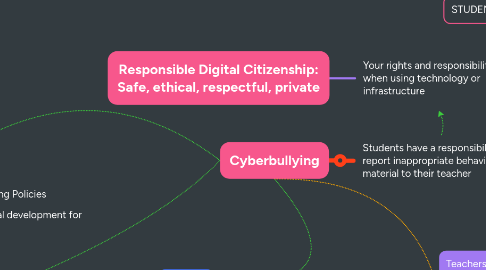
1. Cyberbullying
1.1. Students have a responsibility to report inappropriate behaviour and material to their teacher
2. Australian Institute for Teaching and Learning School Leadership Standards
3. Professional development for Teachers
4. Prevention programs
5. IT and Cyberbullying Policies
6. School Community
6.1. Strong school culture of anti-bullying strategies, shared information, open communication, timely responses to incidences.
7. Students
7.1. Impacts
7.1.1. Social changes
7.1.2. Emotional distress
7.1.3. School absences
7.1.4. School work suffering
8. Identify, Prevent and Address harmful behaviour
9. Your rights and responsibilities when using technology or infrastructure
9.1. Students have a right to expect secure access to the internet and selected online services as a part of their education.
9.1.1. Students must not attempt to disable or defeat virus protection, web filtering and other safeguards.
9.1.2. Students must not share passwords or use another person’s account.
9.1.3. Emails and web searching history are kept for two years. These records can be used in school investigations, court proceedings and for other legal reasons.