Digipedagogical Competence
von Mindy Wang
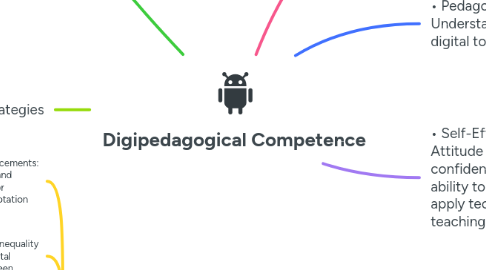
1. Definition - "Digipedagogical competence is the ability to integrate digital tools meaningfully in teaching and learning, focusing on pedagogy rather than just technology."
1.1. 下一级主题
2. • Frameworks & Strategies
2.1. o TPACK Model: Combining technological, pedagogical, and content knowledge as a tripartite model and finding that ideal balance of the three
2.2. o DigCompEdu Framework: Six areas of competence, including professional engagement, digital resources, teaching and learning, assessment, empowering learners, and facilitating learners’ digital competence.
3. • Pedagogical Skills: Understanding how to utilize digital tools to enhance learning.
3.1. o Macro: Meaningful integration of technology in teaching
3.2. o Micro: Enhancing and innovating teaching and learning
4. • Self-Efficacy: Attitude and confidence in one’s ability to learn and apply technology in teaching.
4.1. o Macro: Positive perspective towards embracing and learning new technologies
4.2. o Micro: Independence and competence built in using new technologies
5. Challenges and Trends
5.1. • Rapid Technological Advancements: Constant evolution of tools and technology requiring need for continuous learning and adaptation
5.2. • Digital Divide: Variations and inequality in access to digital resources between schools and regions.
5.3. • Student Competencies: Need for comprehensive ICT education to standardize the level of digital skills across student population and transfer these skills from entertainment use to learning application
5.4. • Teacher Competencies Lack of standardized professional development and understanding of self-efficacy, hence the need for ongoing training and support for teachers
5.5. • Educational Policies Government funding, national and local strategies and infrastructure for digital education
5.6. • Parents' Concerns Parents with low digital literacy struggle to support children using AI tools (e.g., adaptive learning apps, chatbots); Prolonged screen use raises worries about physical Health and mental Health
6. • Technological Skills: Ability to use ICT tools, software, and applications.
6.1. o Macro: Planning, implementing, and assessing teaching with technology
6.2. o Micro: Use of technological tools, devices, applications, and software
7. Team Members: Lindy Liong, Viktoria Stefan, Xia Wang
8. Key Questions for the Future
8.1. • How can we provide an egalitarian culture of digital learning for all students regardless of socio-economic backgrounds? • What strategies can support teachers in integrating technology effectively to enhance learning outcomes? • How can digital tools be used to foster 21st-century dispositions like problem-solving skills, critical thinking and creativity? • What policies, initiatives, strategies should governments implement to support digital education and to continuously enhance teachers' digipedagogical competence? • How willthe role of teachers transform when AI handles tasks like grading, lesson planning, or tutoring? • What support do parents need to navigate AI-driven education systems while maintaining human-centered parenting?


