How can we improve our classrooms to make them more culturally responsive?
von Collin Plunkett
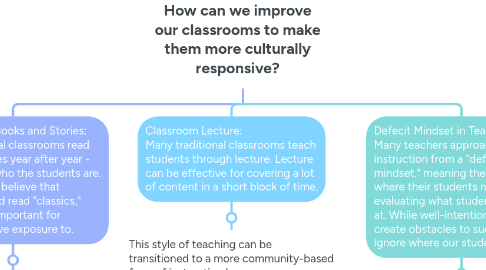
1. Standardized Books and Stories: Many traditional classrooms read the same stories year after year - regardless of who the students are. Many teachers believe that students should read "classics," which can be important for students to have exposure to.
1.1. One way to make this practice more culturally responsive is to include the students in selecting books and stories to read. Students should have agency in selecting stories where they might see themselves or their lives reflected. Balancing the reading content to include a wide range of texts can support the class in seeing "mirrors of themselves, and windows into the lives of others."
2. Classroom Lecture: Many traditional classrooms teach students through lecture. Lecture can be effective for covering a lot of content in a short block of time.
2.1. This style of teaching can be transitioned to a more community-based form of instruction by engaging students in discussions with each other. When students become actively involved in their learning, they are agents of learning and gain a deeper understanding of these topics. Moreover, through discussion, students get to share more with their peers about who they are and how their life experiences have shaped them.
3. Defecit Mindset in Teaching: Many teachers approach their instruction from a "defecit mindset," meaning they assess where their students need help by evaluating what students are worst at. While well-intentioned, it can create obstacles to success to ignore where our students excel.
3.1. A transition to an asset-based approach to instruction means that a teacher begins to meet students where they succeed and use it as a launch point into creating opportunities for students. Asset-based approaches to teaching also encourage teachers to get to know their students and form relationships as students get to show off their talents and knowledge.


