


1. Power
1.1. Established institutions hold power
1.1.1. Government use power to supress/control data/narrative
1.1.2. Non-government agencies fund research to support their interests
1.2. Power: The ability to control ones own situation and that of others
1.2.1. Context: Those in power influence the context of a period of history (who has rights, who is suppressed, etc)
1.2.2. Policy/Regulations shape what data is collected
1.3. Time: Who is in power changes over time
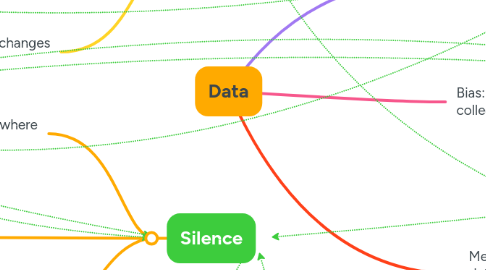
2. Silence
2.1. Creates gaps in history where data should be present
2.1.1. Missing data can change narratives
2.1.2. Reinforces existing supression of the time period (recursive feedback)
2.2. Deliberate erasure can remove specific parts of history
2.2.1. Those with the ability to rewrite history can silence parts they don't like
2.2.2. Can instill distrust of major soures of information/data
2.3. Mishandled categorization can inadvertently silence minorities
2.3.1. Binary gender data can silence information on non-binary people
2.3.2. Incorrectly labeled geographic regions can misrepresent history
3. Narrative
3.1. Story that tells history of events
3.1.1. Inherits sampling bias, silence, and context from events
3.1.2. Not always false and can be based on real events
3.2. Narratives are subjective
3.2.1. Perspective affects how events in history are interpreted
3.2.2. Biases affect how we view events in history
3.3. Framing of historical events changes the story being told
3.3.1. Misleading graphs/visualizations of data can omit important information or context
3.3.2. Can introduce bias where there was none previously in the data (ignoring parts of data to fit a narrative you prefer)
4. Information about a specific sample during specific time
4.1. Fact: Information used in data consists of facts
4.1.1. Objective: Facts are based on objective reality