


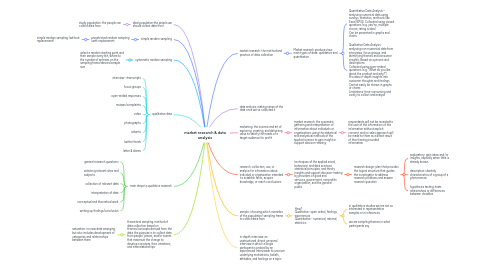
1. ideal population:the people we should collect data from
1.1. study population: the people can collect data from
2. simple random sampling
2.1. unrestricted random sampling (with replacement
2.1.1. simple random sampling (without replacement)
3. systematic random sampling
3.1. select a random starting point and then sample every kth, where k= the number of entriees on the sampling frame/desired smaple size
4. qualitative data
4.1. interview->transcripts
4.2. focus groups
4.3. open-ended responses
4.4. reviews/complaints
4.5. video
4.6. photographs
4.7. adverts
4.8. twitter feeds
4.9. letter & diares
5. main steps to qualiative research
5.1. general research questions
5.2. selecting relevant sites and subjects
5.3. collection of relevant data
5.4. interpretation of data
5.5. conceptual and theoretical work
5.6. writing up findings/conclusion
6. theoretical sampling: method of data collection based on themes/concepts derived from the data. the purpose is to collect data from people, places, and/or events that maximize the change to develop concepts, their variations, and interrelationships
6.1. saturation: no new data emerging, but also includes development of categories and relationships between them
7. market research: the method and practice of data collection
7.1. Market research produces two main types of data: qualitative and quantitative.
7.1.1. Quantitative Data Analysis – analysing numerical data using surveys, statistics, and tools like Excel/SPSS. Collected using closed questions (e.g. yes/no, multiple choice, rating scales) Can be presented in graphs and charts
7.1.2. Qualitative Data Analysis- analysing non-numerical data from interviews, focus groups, and identifying themes and consumer insights. Based on opinions and descriptions Collected using open-ended questions (e.g. “What do you like about the product and why?”) Provides in-depth insights into customer thoughts and feelings Cannot easily be shown in graphs or charts Limitations: time-consuming and costly to collect and analyse
8. data analysis: making sense of the data once we've collected it
9. marketing: the science and art of exploring, creating, and delivering value to satisfy the needs of a target audience for profit
9.1. market research: the sysematic gathering and interpretation of information about indivduals or organizations using the statistical and analystical mathods of the applied science to gain insight or support decision-making
9.1.1. respondants will not be revealed to the user of the information of the information without explicit consent, and no sales appoarch will be made to them as a direct result of their having provided information
10. research: collection, use, or analysis for infromation about indivdual or organization intended to establish facts, acquire knowledge, or reach conclusions
10.1. techniques of the applied social, behavioral, and data sciences, statistical principles, and theory insights and support decision-making by providers of good and services, government, nonprofits organization, and the general public
10.1.1. research design: plan that provides the logical structure that guides the investigator to address research problems and answer research question
10.1.1.1. exploratory: gain ideas and /or insights, espically when little is already known
10.1.1.2. descriptive: identidy characteristics of a group of a phenomenon
10.1.1.3. hypothesis testing: tests relationships or differences between variables
11. sample: choosing which memebrs of the population/ sampling frame to collect data from
11.1. How? Qualitative- open verbal, feelings, experiences Quantitative - numerical, rational, statistics
11.1.1. in qualitative studies we are not so interested in representative samples or in inferences
11.1.2. we are sampling themes in what participants say