

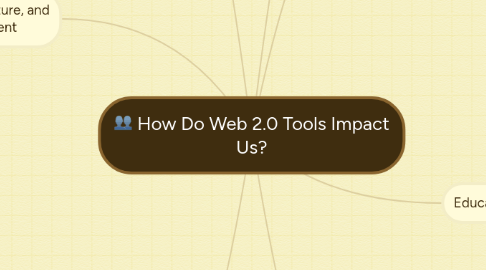
1. Current News and Areas of Impact
1.1. The faster we adapt to Web 2.0 tools for sharing information, the easier our lives will be
1.1.1. McKinsey & Company survey
1.1.1.1. Higher revenue
1.1.1.2. Better access
1.1.1.3. Lower cost
1.1.1.4. Effective marketing
1.1.1.5. Innovative goods/services
1.1.2. Bloggger
1.1.3. Google Docs
1.1.3.1. Collaborate with other Google applications
1.1.3.2. Links to Gmail
2. Arts, Literature, and Entertainment
2.1. Social networking sites and media
2.1.1. Arts
2.1.1.1. Etsy
2.1.1.2. Art.com
2.1.1.3. FineArtAmerica
2.1.1.4. DeviantArt
2.1.2. Literature
2.1.2.1. eBooks
2.1.2.1.1. Designated for book sales
2.1.2.2. Amazon
2.1.2.2.1. Originally a book store
2.1.2.2.2. Audible
2.1.2.3. Blogger
2.1.3. Entertainment
2.1.3.1. Youtube
2.1.3.1.1. Video Uploading and Sharing
2.1.3.1.2. Youtubers
2.1.3.2. Netflix
2.1.3.2.1. (Movie) Taste Preference Profiling
2.1.3.2.2. RSS feeds
3. What are Web 2.0 Tools?
3.1. New ways of creating, collaborating, editing and sharing user-generated content online
3.1.1. Software
3.1.1.1. the programs and other operating information used by a computer
3.1.2. Databases
3.1.2.1. a structured set of data held in a computer
3.1.3. Social Networking Sites
3.1.3.1. a site to interact with other users, or to find people with similar interests to oneself
3.1.4. Mashups
3.1.4.1. a fusion of separate elements
3.1.5. Applications
3.1.5.1. a program designed to perform a specific function directly for the user
3.1.6. Videos
3.1.6.1. a recording of moving visual images made digitally
3.1.7. Wikis
3.1.7.1. a website that allows collaborative editing of its content by its users
3.1.8. Blogs
3.1.8.1. a regularly updated website or web page, typically one run by an individual or small group, that is written in an informal or conversational style
3.1.9. Folksonomy
3.1.9.1. a user-generated system of classifying and organizing online content into different categories
3.2. Ways of providing ease of use
4. Public Opinion
5. Government, Employment, and Politics
5.1. Politics
5.1.1. Persuasion/Influence
5.1.2. Expression of opinions
5.1.3. Satire
5.2. Employment
5.2.1. Social media accounts
5.2.1.1. Twitter
5.2.1.1.1. Privacy
5.2.1.1.2. Confidentiality
5.2.1.2. Facebook
5.2.1.2.1. Privacy
5.2.1.2.2. Confidentiality
5.2.2. Digital portfolio
5.2.3. Digital resume
5.3. Government
5.3.1. Instagram
5.3.1.1. Propaganda
5.3.1.2. Appeal to younger audience
5.3.2. Facebook
5.3.2.1. Popular Posts
5.3.2.1.1. Freedom of Speech
6. Education
6.1. Networking sites and tools for learning and broadcasting has helped communication between students and teachers
6.1.1. Java
6.1.2. FreeMind
6.1.3. WikiSpaces
6.1.4. Pixlr
6.1.5. Audio Expert/Audacity
6.1.6. Edmodo
6.1.7. Google Applications
6.1.7.1. Google Forms
6.1.7.2. Google Classrooms
6.1.7.3. Google Slides
6.1.7.4. Google Spreadsheets
6.1.7.5. Google Docs
6.1.8. Skype
6.1.9. Diigo
7. Science, Environment, and Health
7.1. Science
7.1.1. Web 2.0 has made sharing information much easier
7.1.1.1. Tools like blogs, wikis, and social networks
7.2. Environment
7.2.1. Social networking
7.2.1.1. Disadvantages: People are starting to communicate face-to-face less and through technology more, leading to social anxiety.
7.2.2. Sharing and communicating new information through social networking
7.2.2.1. Snapchat
7.2.2.2. Instagram
7.2.2.3. Facebook
7.2.2.4. MySpace
7.3. Health
7.3.1. being able to send patient records quickly can potentially save many lives
7.3.2. People are constantly using technology which causes less physical activity and leads to obesity