

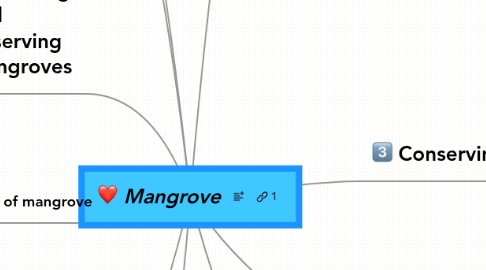
1. where are mangroves usually found?
1.1. Mangrove swamps are found along tropical seacoasts
1.1.1. What are some examples of the tropical seacoasts.
2. Looking and observing mangroves
2.1. researching on mangroves
2.1.1. finding out the use of mangroves.
2.1.2. special features of mangroves.
2.1.2.1. they have roots pointing out of the soil.
2.1.2.1.1. New node
2.2. taking notes of mangroves
2.2.1. What are the different types of Mangroves
2.3. taking photos of mangroves
2.3.1. The different types of mangroves and where it is taken
3. Investigating around the mangrove area
3.1. finding out how the mangrove grows.
3.2. finding out the kinds of condition a mangrove grows in
3.2.1. Does it need normal room temperatured water or natural water and does it needs direct sunlight or just a glipse of the sunlight?
4. what are mangroves?
4.1. Mangroves are various kinds of trees up to medium height and shrubs that grow in saline coastal sediment habitats
4.2. They look like trees but only with roots at the bottom that is quite high and very visible through the naked eye. The roots can be thick or thin depending on what type of mangrove it is.
5. Biggest type of mangrove
5.1. Suburban in Bangladash
6. New node
7. Methods of planting a mangrove
7.1. mangroves reproduce by seeds
7.1.1. New node
7.2. when the seeds of the mangroves are ripe, they will drop from the top and will inject into the mud.
8. exploring for organisms
8.1. Any other species that are alien or not yet known by most people that are living near the mangroves.
8.2. searching for crab species.
8.2.1. take pictures of organisms.
8.3. search for other organisms.
8.3.1. taking pictures of rare species of organisms.
8.3.1.1. Organisms that lives near/among/at mangroves
8.4. Look for micro-organisms or other organisms living near mangroves
8.5. New node
9. Saving mangroves
9.1. Ways of saving mangroves
9.2. planting mangroves
9.2.1. by dispersing the seeds to somewhere further from the parent tree
10. Conserving mangroves
10.1. Find out ways to save mangroves
10.1.1. conserve the mangroves
10.1.2. you can help to pick [up litter there
10.1.3. do not litter there
10.2. why should we save mangroves?
10.2.1. • Mangroves are buffers between the land and sea and hence they protect the land from erosion. • They are land builders. • They harbour a variety of life forms like invertebrates, fish, amphibians, reptiles, birds and even mammals like tigers. • Mangroves are the main source of income generation for shoreline communities like fisher folk.