
Learning Objective: Students will be able to measure objects in millimeters, centimeters and meters

Plan your projects and define important tasks and actions

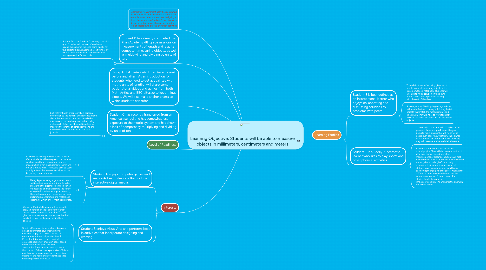
1. Extensions: Measurement activities can always be extended for more advanced students. For example, when other students are designing a floor plan for a house Student D can choose to design an entire house. She can perform the role of expert during group or station activities
2. Student D has already completed the Khan Academy 4th grade missions on measurements of length and is quite competent measuring objects, as well as multiplying and dividing by units of ten.
2.1. Student Teacher: Student D (although this also goes for others at her level of readiness), having the acquired the skills being taught for this objective, can challenge herself further by writing word problems for her classmate or making an entire Kahoot! quiz.
3. Using digital media (which can be accessed before and after): As an introduction for students who need to get acquainted with metric units of length, I will share some basic tutorial videos and games from both Math Antics and BBC bitesize to keep things simple. We will also make anchor charts to which students can refer.
4. Student C has recently transferred from an American school and has somewhat less exposure to the metric system and has shown a lack of competency multiplying and dividing by units of ten.
4.1. Self-referential: In order to make a personal connection to the content and learn basic facts about themselves, students will be asked to measure each others height on a chart using metric units. After this, they will be asked to measure the lengths of other body parts and record these measurements in their math journals.
5. Level of Readiness
6. Interests
6.1. Student A enjoys computer games and responds best to lessons that include interactive digital media.
6.1.1. Online Game: Using the online Metric Ruler Game, students will race against the clock to see how quickly and accurately they can measure find given measurements in mm and cm on a metric ruler. This would best be used as a light formative assessment either at the beginning or end of a lesson.
6.1.2. Using Apps: Working in groups, students will be asked to solve word problems by measuring the distances between certain objects and landmarks around the school using the EasyMeasure app. Afterward, they will convert each measurement into millimeters, centimeters and meters and determine which unit is most appropriate.
6.2. Student B enjoys Visual Arts and performs best in activities that incorporate designing and crafting.
6.2.1. Choice of Product: Students will be asked to draw a floor plan of their bedroom or their dream bedroom to scale (1cm=1m). This will give them some creative control over the final product, so long as they can justify their choices.
6.2.2. Creative Response: After we have discussed area and perimeter, students will have a chance to apply their understanding of measurement. An activity called Area & Perimeter Robots will require students to create robots using 1 cm graph paper based on measurements given them by "N.A.S.A"(me). For example, I will tell them that the robot's head has a perimeter of 24 cm and they can choose to cut out a 6cm x 6cm square for the head, or any other shape that has an equivalent perimeter.
7. Learning Profiles
7.1. Student E is best defined as an Interpersonal learner who enjoys collaborating and discussing solutions to problems with peers.
7.1.1. Think-Pair-Share: After being given word problems about measuring objects in the classroom (desk, notebook), students will attempt to find a solution on their own before talking with a peer and sharing with the rest of the class.
7.1.2. Scavenger hunt: Working in groups, students will seek to find and photograph (using iPads) objects that match the measurements and clues given. They will have to work together to solve the clues and measure the suspected objects.
7.2. Student F is a Bodily-Kinesthetic learner who likes to play sports and other physical activities.
7.2.1. Construction: Students will be told to create paper airplanes, using A4 paper, the goal being to make a plane that will fly as far as possible. In pairs, they will throw their planes to see whose can go further. After throwing, they will measure and record their distance.
7.2.2. Athletics: Students will participate in a mini-olympics. They will visit various stations to play mini-games related to metric measurements of distance. Students will first record their estimates of the distance they have thrown, shot or rolled, before actually measuring their actual distance. After all stations have been completed by all teams, each student should find the score, which is the difference between the estimates and the actual measurement for each event. Each student totals the numbers in the score column. The winner is the one with the lowest score.