

Theoretical and pedagogical concerns
von eugenia albarracin
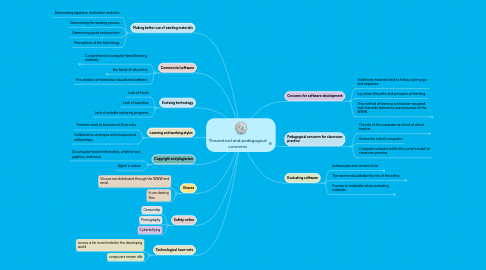
1. Making better use of existing materials
1.1. Determining expertise, motivation and roles
1.2. Determining the working process
1.3. Determining goals and priorities
1.4. Perceptions of the technology
2. Commercial software
2.1. Comprehensive computer-based learning materials
2.1.1. Project specifications
2.1.2. End User requirements
2.1.3. Action points sign-off
2.2. the hands of educators
2.2.1. Define actions as necessary
2.3. the creation of interactive educational software
3. Evolving technology
3.1. Lack of funds
3.2. Lack of expertise
3.3. Lack of suitable authoring programs
4. Learning and working styles
4.1. Teachers need to be aware of their roles
4.2. Collaborative strategies and interpersonal relationships.
5. Copyright and plagiarism
5.1. All computer-based information, whether text, graphics, and music.
5.2. digital in nature
6. Viruses
6.1. Viruses are distributed through the WWW and email.
6.2. It can destroy files.
7. Safety online
7.1. Censorship
7.2. Pornography
7.3. Cyberbullying
8. Technological have-nots
8.1. access is far more limited in the developing world
8.2. computers remain idle
9. Concerns for software development
9.1. Traditional materials tend to follow a set scope and sequence.
9.2. Lay down the paths and principles of learning.
9.3. This method of learning is a teacher-assigned task that asks learners to use resources on the WWW.
9.3.1. Included
9.3.2. Included
9.3.3. Excluded
10. Pedagogical concerns for classroom practice
10.1. The role of the computer as a kind of virtual teacher
10.1.1. Materials
10.1.2. Personel
10.1.3. Services
10.1.4. Duration
10.2. Assess the role of computers
10.3. Computer software within the current model of classroom practice
11. Evaluating software
11.1. behaviourist and constructivist
11.1.1. Dependencies
11.1.2. Milestones
11.2. The teacher should take the role of the editor,
11.2.1. Schedule
11.2.2. Budget
11.3. Process to undertake when evaluating materials.
11.3.1. KPI's