

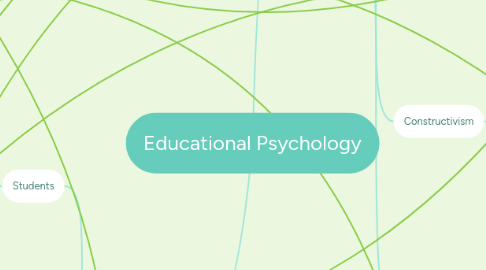
1. Classroom
1.1. Students
1.1.1. Diversity
1.1.1.1. Age
1.1.1.2. Gender
1.1.1.3. Ethnicity
1.1.1.4. Socio-economic
1.1.1.5. Sex
1.1.1.6. Prior knowledge
1.1.1.7. Processing speed
1.1.2. Self-view
1.1.2.1. Self-concept
1.1.2.2. Self-esteem
1.1.3. Personality
1.1.3.1. Biological
1.1.3.1.1. Temperament
1.1.3.2. Environment
1.1.3.2.1. Parents
1.1.3.2.2. Culture
1.1.3.2.3. Peers
1.1.4. Memory
1.1.4.1. Long term
1.1.4.2. Short term
1.1.4.3. Reinforce
1.1.4.3.1. Healthy habits
1.1.4.4. Loose
1.1.4.4.1. Stress
1.2. Teachers
1.2.1. Inquiry-based learning
1.2.2. Problem-based learning
1.2.2.1. Critical thinking
1.2.2.2. Creativity
1.2.3. Scaffolding
1.2.4. Growth Mindset
1.2.5. Fixed Mindset
1.3. Inclusiveness
2. Theories
2.1. Behaviorism
2.1.1. Operant conditioning
2.1.1.1. Skinner
2.1.1.2. Reinforcement
2.1.1.2.1. Positive
2.1.1.2.2. Negative
2.1.1.3. Punishment
2.1.2. Classical conditioning
2.1.2.1. Stimulus
2.1.2.2. Response
2.1.2.3. Pavlov's dog
2.2. Social Learning Theory
2.2.1. Bandura
2.2.2. Modeling
2.2.3. Observation
2.2.4. Identification
2.3. Cognitive development theories
2.3.1. Piaget
2.3.1.1. Seonsorimotor
2.3.1.2. Preoperational
2.3.1.3. Concrete operational
2.3.1.4. Formal operational
2.3.2. Vygotsky
2.3.2.1. Internalization
2.3.2.2. Zone of proximal development
2.4. Constructivism
2.4.1. Social
2.4.2. Individual
2.5. Gardner's Multiple Intelligences
2.5.1. Linguistic
2.5.2. Logical-mathematical
2.5.3. Spatial
2.5.4. Musical
2.5.5. Bodily-Kinesthetic
2.5.6. Interpersonal
2.5.7. Intrapersonal
2.5.8. Naturalist