

1. Cystitis
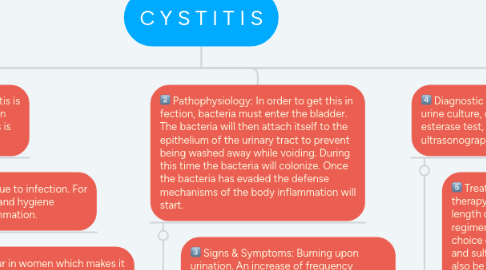
2. Description of disorder: Cystitis is an inflammation of the bladder. In most cases, the cause of cystitis is a urinary tract infection.
2.1. Cystitis is not always due to infection. For an example: Medications and hygiene products can cause inflammation.
2.1.1. Most cases occur in women which makes it important to: Maintain hydration, hygiene, and avoid irritation from feminine products like douches and powders.
3. Pathophysiology: In order to get this in fection, bacteria must enter the bladder. The bacteria will then attach itself to the epithelium of the urinary tract to prevent being washed away while voiding. During this time the bacteria will colonize. Once the bacteria has evaded the defense mechanisms of the body inflammation will start.
3.1. Signs & Symptoms: Burning upon urination. An increase of frequency (voiding more than every three hours) Nocturia which is defined as awakening at night to urinate. Dysuria which describes the difficulty of urination. Urethral discharge
4. Diagnostic Tests: Microscopic Urinalysis, urine culture, cellular studies, leukocyte esterase test, CT scan, and ultrasonography
4.1. Treatment options: Through antibiotic therapy which has few side effects. The length of treatment through antibiotic regimen of 3-5 days. Popular drugs of choice can be: amoxicillin, trimethoprim and sulfamethoxazole. A urine culture may also be taken 1-2 weeks later to confirm eradication of infection
5. NURSING:
5.1. Nursing Diagnoses: Acute pain related to infection within the urinary tract. Deficient knowledge about factors predisposing the patient to infection and recurrence, detection and prevention of recurrence, and pharmacologic therapy.
5.1.1. Nursing Care: Relief of pain and discomfort. Increased knowledge of preventative measures and treatment modalities
5.1.2. Nursing Interventions: Nursing interventions include educating the patient on the purpose of the antibiotic and emphasizing the importance of completing the full course of antibiotics. Increase fluid intake and encourage cranberry juice and oral doses of vitamin C. Look out for GI disturbances from antimicrobial therapy. This may include administering nitrofurantoin crystals with milk or a meal to prevent distress. Relieve pain by use of warm sitz bath. During collection of specimen it is important to educate women to clean the perineum properly and to keep the labia separated while voiding, as this is essential for proper diagnosis.