

Cognitive Flexibility & Cognitive Self-Control
par Brenna Mooney
1. Inhibit an instictive or habitual response and put in place a more effective, less obvious one
2. Plays a crucial role in early childhood development
2.1. Kids may not understand social rules
2.2. ADHD
2.3. High ACE score (many adverse childhood experiences)
2.4. Sign of frustration about school, friends or home life
3. Regulate emotions, thoughts and behaviors
4. Necessary to regulate in order to achieve specific goals
5. 3 Components of Self-Control
5.1. Monitoring - keeping track of thoughts, feelings and actions
5.2. Standards - guidelines to steer towards desirable responses
5.3. Strength - energy needed to control our impulses
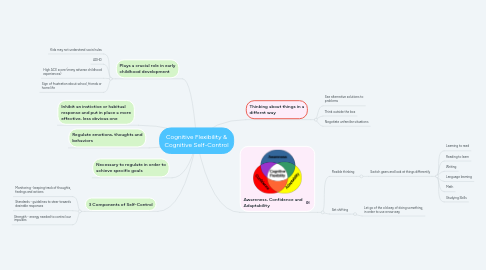
6. Awareness, Confidence and Adaptability
6.1. Flexible thinking
6.1.1. Switch gears and look at things differently
6.1.1.1. Learning to read
6.1.1.2. Reading to learn
6.1.1.3. Writing
6.1.1.4. Language learning
6.1.1.5. Math
6.1.1.6. Studying Skills
6.2. Set shifting
6.2.1. Let go of the old way of doing something, in order to use a new way