


1. 1-Sentence-Summary:
1.1. When: The Scientific Secrets of Perfect Timing breaks down the science of time so you can stop guessing when to do things and pick the best times to work, eat, sleep, have your coffee and even quit your job.
2. Favorite quote from the author:
2.1. "We all know that timing is everything. Trouble is, we don't know much about timing itself." - Daniel Pink
3. 3 lessons:
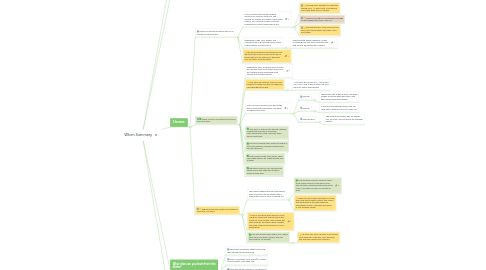
3.1. There’s an emotional pattern each of us follows on any given day.
3.1.1. If you to write down the dominating emotion for morning, afternoon, and evening for a week, you'd spot a very subtle pattern, as a study by Cornell University analyzing 500 million tweets has found:
3.1.1.1. Morning peak. Whether it’s right after waking up or 1-2 hours later, most people feel pretty good early in the day.
3.1.1.2. Afternoon trough. You know how it’s tough to stay awake after lunch? This is it.
3.1.1.3. Evening rebound. Once you knock off work, even the toughest days take a turn, don’t they?
3.1.2. Regardless of age, race, gender, and nationality, we all go through some variant of this pattern on a daily basis.
3.1.2.1. Nobel laureate Daniel Kahneman, author of Thinking Fast and Slow, confirmed this with the Day Reconstruction Method.
3.1.3. This holds powerful implications for how we should go about our day, but it’s also a good pattern to be aware of to deal with your emotions more efficiently.
3.2. Figure out your chronotype to produce your best work.
3.2.1. Keeping our daily, emotional cycle in mind, we can learn even more about ourselves if we combine it with something more familiar: our circadian rhythm.
3.2.2. Over time, we naturally come to some insight as to when we have our highs and lows throughout the day.
3.2.2.1. “I just can’t get up before 7,” “I’m a night owl,” and “I love to get up early” are lines we’ve all said or heard before.
3.2.3. How you feel at certain times during the day is called your chronotype, and there are three major ones:
3.2.3.1. The lark.
3.2.3.1.1. People who love to get up early, and have all their emotional highs and lows a few hours earlier than most people.
3.2.3.2. The owl.
3.2.3.2.1. If you don’t like getting up early and can really get to work around 9 PM, that’s you.
3.2.3.3. The third bird.
3.2.3.3.1. The majority of people, who are neither late, nor early, and just follow the standard pattern.
3.2.4. Over 50% of folks go into the last category, meaning they should do analytical, logic-based work in the mornings, when they’re most alert.
3.2.5. The more creative tasks, where it’s helpful if your mind wanders, should be reserved for the late afternoon.
3.2.6. Larks should do the same earlier, while owls might want to do cognitive work late at night.
3.2.7. Whichever type you are, doing boring admin stuff in the afternoon trough is always a good idea!
3.3. Regular breaks and nappuccinos help you save time, not lose it.
3.3.1. The science behind how much we should work and how much we should relax is surprisingly much in favor of chilling out.
3.3.1.1. Time tracking company DeskTime did a study using millions of data points from their software, determining the ideal break to be 17 minutes for every 52 minutes of work.
3.3.1.2. While it’s easy to think that there’s no way this could lead to better results, they found that the quality of the work ended up being higher overall, compared to shorter or less frequent breaks.
3.3.2. Even if your boss won’t allow so much “slacking,” taking five minutes every hour to get up, move around, walk outside, get some fresh air, and have a glass of water, can make a significant difference in your productivity.
3.3.3. Dan recommends the ‘nappuccino.’ Ideally after lunch, you have a coffee, then set your timer to 20 minutes.
3.3.3.1. If it takes you seven minutes to fall asleep, you’ll wake up a little later, fully refreshed and with the caffeine just kicking in.