


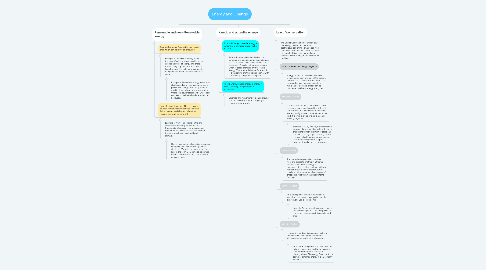
1. Renewable and non - Renewable energy
1.1. Renewable energy: Renewable sources are ones which can be recycled or reused.
1.1.1. Example of Renewable energy: Wind turbines ,Wind is moving air and it can be used as a source of energy. The energy from moving air particles is used to turn large turbines. The turbines are connected to a generator which produces electrical energy.
1.1.1.1. Example of Renewable energy: Water can also be used as an energy source. hydro power. The energy from falling water is used to drive turbines in a power station. Unlike coal power stations, the water does not need to be heated and the water can be reused.
1.2. Non - Renewable energy : Non-renewable sources cannot be reused and so there is a limited amount available and when that runs out there will be none left.
1.2.1. Example of Non - Renewable: Petrol and diesel are used mainly as fuel for cars, trucks and motorbikes. They are produced from crude oil, which is a fossil fuel formed from the remains of dead prehistoric animals.
1.2.1.1. Coal is most commonly used as a source of energy by power stations to generate electricity. We will learn more about this later in the term. Coal can also be burned in fires to keep warm or in coal stoves to cook our food.
2. Kinetic and potential energy
2.1. Potential Energy: potential energy is stationary, with stored energy to be released;
2.1.1. Rubber bands can be classified as both potential and kinetic energy, depending on the state of the band. When an elastic is stretched, it’s loaded with potential energy; when released there is a shift to kinetic energy. This is especially true if the elastic is transporting another object, such as with a rock being flung from a slingshot.
2.2. Kinetic Energy: kinetic energy is energy in motion, actively using energy for movement.
2.2.1. Example: The movement of planets around the sun and other stars in the galaxy is kinetic energy at work.
3. Law of conservation
3.1. The Law of Conservation of Energy states that energy cannot be created or destroyed, it can only be transferred from transferred from one part of the system to other parts. This means that we keep recycling all the energy in the universe all the time!
3.2. Potential and Kinetic energy in system
3.2.1. energy cannot be created or destroyed. It is transferred from one part of the system to other parts. When it is transferred it can be stored or used to make something move and so potential energy can be transferred to kinetic energy in a system.
3.3. Mechanical System
3.3.1. A mechanical system is one which is based on mechanical principles and the different parts interact in a mechanism. A mechanical system usually involves movement of some kind. It is often a group of simple machines working together.
3.3.1.1. Example: A Pulley system, Pulley system is very popular and simple machine. It use to change movement direction of cable and can reduce heavy object. A pulley system has a wheel with a groove on an axle or shaft that is designed to support movement , and a rope in the groove.
3.4. Thermal System
3.4.1. The thermal energy can be transferred from one object to another in a thermal system. When thermal energy is transferred, this is called heat. We will look more at this in the next chapter, but for now let's look at some simple examples of energy transfers within thermal systems (heating).
3.5. Electrical System
3.5.1. An electric power system is a network of electrical components deployed to supply, transfer, and use electric power.
3.5.1.1. Example: An example of a power system is the electrical grid that provides power to homes and industries within an extended area.
3.6. Biological System
3.6.1. he scientific study of living organisms from the molecular level to their interactions with one another and their environments.
3.6.1.1. Example: Photosynthesis, A plant uses the radiant energy from the Sun to make its own food through the process of photosynthesis. The energy from the Sun is stored as potential energy in plants, mainly as starch.