


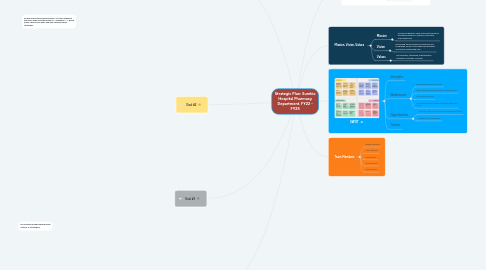
1. Goal #3
1.1. Goal: Research
1.1.1. Develop research program within department
1.2. Metrics
1.2.1. Begin research project for clinical workload by end of FY 22
1.2.2. Fully functioning research department by FY25
1.3. Tactics/Strategies
1.3.1. Develop resources to create a sustainable research model for the Department of Pharmacy
1.3.2. First research project will be clinical workload
1.3.2.1. Look at productivity
1.3.2.2. Verifying staffing levels for pharmacists and pharmacy technicians
2. Goal #1
2.1. Goal: Talent and Culture
2.1.1. Recruitment and retention of quality pharmacy team
2.1.1.1. Develop quality Pharmacists and Pharmacy Technologists
2.2. Metrics
2.2.1. FY22 decrease vacancy rates for pharmacy techs by 20%
2.2.2. FY25 decrease turnover rates by 50%
2.2.3. FY 25 Establish clinical ladder for pharmacy technologists
2.2.4. FY 22 Quarterly education programs offered
2.2.5. Employee Pulse Survey results of Tier 2 or better for FY22
2.3. Tactics/Strategies
2.3.1. Create a pharmacy technician training program compliant with OAC 4729:3-3-02
2.3.1.1. Onboarding program aligned with new health system
2.3.1.2. Utlize new technology and resouces to improve training
2.3.2. Market analysis for pay- Look to ensure pay is equal to or better than large medical center and other area hospitals
2.3.3. Clinical/ Career Ladder program
2.3.4. Continuing Education program
2.3.5. Talk to pharm techs to see if they want advancement in healthcare then assist them
2.3.5.1. Shadow days with other employees
2.3.5.2. Tuition reimbursement program
2.3.5.3. Ensure we are working around school schedules
2.3.6. Employee Pulse Survey FY22 and FY25
3. Goal #2
3.1. Goal: Safety & Quality
3.1.1. Promote a safe department and organization
3.1.2. Meet and exceed regulatory standards
3.1.2.1. Meet the TJC National Patient Safety Goals?
3.2. Metrics
3.2.1. Current error rate is 7%. FY22- decrease to 5.5%, by FY25- be at or below the national average
3.2.2. Begin to utilize KPI Dashboards by FY 23
3.2.3. Monthly committee meeting to review patient safety event reports related to pharmacy
3.2.4. Quality Metrics
3.2.4.1. Stroke: Door to needle
3.2.4.2. Sepsis Time Out
3.2.4.3. Antibiotic Administration
3.3. Tactics/Strategies
3.3.1. Standardize workflows
3.3.1.1. Optimize and standardize safety strategies across the organization
3.3.2. Improve transparency through communication and coordination of safety and quality information
3.3.2.1. Crew Resource Management Training
3.3.2.2. Set up KPI Dashboards
3.3.3. Improved training
3.3.4. Maintain adequate staffing numbers
3.3.5. Retain qualified staff
3.3.6. Review all patient safety event reports around medications
3.3.6.1. Identify trends and address as needed
3.3.7. Environment of Care Surveillance
3.3.7.1. Monthly environment of care survey data
3.3.7.1.1. IV room air pressure
3.3.7.1.2. Air quality
3.3.7.1.3. Viable sample monitoring
4. Goal #4
4.1. Goal: Healthcare Delivery
4.1.1. Effectively optimize pharmacy automation and clinical system resources
4.1.2. Ensure cost-effective medication use, maintain sustainable business practices, and capitalize on new opportunities
4.1.3. Provide leadership in variation reduction efforts
4.2. Metrics
4.2.1. Full pharmacy integration with parent company by FY23
4.2.2. Use of KPI Dashboard by FY 23
4.2.3. 5% Reduction in medication waste for FY22, additional 3% reduction by FY25
4.2.4. 2% reduction in medication costs for FY22 with additional 2% by FY25
4.3. Tactics/Stratgies
4.3.1. Utilize new technology and resources for automation of pharmacy services
4.3.2. Leverage use of smart pump EMR data and capabilities
4.3.3. Integration of pharmacy systems with information technology into electronic medical records
4.3.3.1. KitCheck
4.3.3.1.1. Tracking system for kit expiration (Code carts, anaphylaxis kits, Broselow bags, etc)
4.3.4. Review vendor and supply contracts
4.3.5. Negotiate better pricing (with parent company)- more bargaining ability
4.3.6. Use KPI Dashboard for assistance with metrics
4.3.7. Evaluate supply vendors for cost effectiveness
4.3.7.1. Implement robust supply chain strategies
4.3.8. Monthly Review
4.3.8.1. Monthly review of medications wasted
4.3.8.2. Monthly review of expired products
5. Do goals need to be more specific? Are we looking at too many topics for this project?---Probably!----I would make 4 goals very basic and then detailed under strategies
6. Do monthly reviews belong under Metrics or Strategies?
7. Mission, Vision, Values
7.1. Mission
7.1.1. To improve health in Ohio and across the world through innovation in research, education and patient care
7.2. Vision
7.2.1. By pushing the boundaries of discovery and knowledge, we will solve significant problems and deliver unparalleled care
7.3. Values
7.3.1. Inclusiveness, Ownership, Determination, Innovation, Empathy, Sincerity
8. SWOT
8.1. Strengths
8.2. Weaknesses
8.2.1. Pharmacy technician turnover
8.2.2. Need standardized workflows to reduce errors
8.2.3. Orientation process
8.2.4. No opportunity for advancement for pharmacy techs
8.3. Opportunities
8.3.1. Recruiting and retaining qualified pharmacy techs
8.3.2. Usage of KPI dashboards