


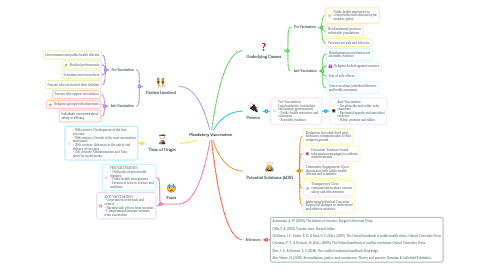
1. Parties Involved
1.1. Pro-Vaccination
1.1.1. Governments and public health officials
1.1.2. Medical professionals
1.1.3. Scientists and researchers
1.1.4. Parents who vaccinated their children
1.2. Anti-Vaccination
1.2.1. Parents who oppose vaccination
1.2.2. Religious groups with objections
1.2.3. Individuals concerned about safety or efficacy
2. Time of Origin
2.1. - 18th century: Development of the first vaccines. - 19th century: Growth of the anti-vaccination movement. - 20th century: Advances in the safety and efficacy of vaccines. - 21st century: Misinformation and "fake news"on social media.
3. Fears
3.1. PRO-VACCINATION - Outbreaks of preventable diseases - Public health emergencies - Erosion of trust in science and medicine
3.2. ANTI-VACCINATION - Government overreach and control - Harmful side effects from vaccines - Compromised immune systems from vaccination
4. Underlying Causes
4.1. Pro-Vaccination
4.1.1. Public health imperative to control infectious diseases (ejm: measles, polio)
4.1.2. Herd immunity protects vulnerable populations
4.1.3. Vaccines are safe and effective
4.2. Anti-Vaccination
4.2.1. Misinformation and distrust of scientific evidence
4.2.2. Religious beliefs against vaccines
4.2.3. Fear of side effects
4.2.4. Concerns about individual liberties and bodily autonomy
5. Powers
5.1. Pro-Vaccination - Legal authority to mandate vaccination (government) - Public health resources and education - Scientific evidence
5.1.1. Anti-Vaccination - Social media and online echo chambers - Emotional appeals and anecdotal evidence - Public protests and rallies