


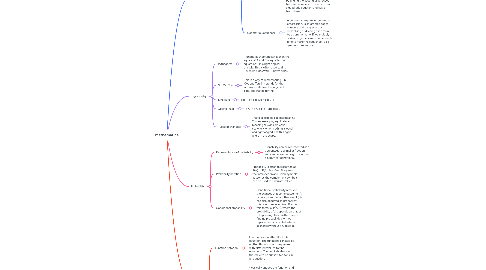
1. Consequences
1.1. Sequences
1.1.1. Arithmitic Sequences
1.1.1.1. General Formula t1+(n-1)d
1.1.1.2. The way to identify an arithmitic sequence is when the first difference in the sequence is constant.
1.1.2. Quadratic Sequences
1.1.2.1. Quadratic sequences are ordered sets of numbers that follow a rule based on the sequence n2 = 1, 4, 9, 16, 25,… (the square numbers). Quadratic sequences always include an n2 term. They are found by finding the second differences between numbers in order to form a quadratic equation and solve it from there.
1.1.3. Geometric Sequences
1.1.3.1. A geometric sequence (geometric progression) is an ordered set of numbers that progresses by multiplying or dividing each term by a common ratio. If we multiply or divide by the same number each time to make the sequence, it is a geometric sequence.
2. Trignometry
2.1. Pythagoras
2.1.1. Pythagoras theorum states than the square of A and B is equal to the square of C in a right angled triangle. This is often used to find unknown sides with 2 known sides.
2.2. SohCahToa
2.2.1. This is a way of remembering Sin, Cos and Tan. Sin stands for the opposite side over the adjacent side, cos stands for the
2.3. Sine Rule
2.3.1. sin A/a = sin B/b = sin C/c
2.4. Cosine Rules
2.4.1. a^2 = b^2+c^2 - 2bc cosA
2.5. Types of triangles
2.5.1. Triangles can be iscolces meaning 2 sides are equal, equilitateral meaning all sides are equal, scalene is when nothing is equal and right angled is with a right angle in the shape.
3. Probability
3.1. Representation of probability
3.1.1. Probability can be represented as a percentage, decimal or fraction and can be seen on a grid or a tree diagram for conditional.
3.2. Probability notation
3.2.1. Probability is often represented as P(A) or P(B). For Venn Diagrams, the intersection and union symbols as well as the complement symbols can be used to calculate values.
3.3. Conditional probability
3.3.1. Conditional probability refers to the chances that some outcome (A) occurs given that another event (B) has also occurred. In probability, this is written as A given B, or as this formula: P(A|B), where the probability of A depends on that of B happening. This is often used for finding probabilities without replacements or probabilities in scenarios without any replace.
4. Functions
4.1. Function notation
4.1.1. Functions are written like F(x)= equation. The functions can also be written through words expressed with different values to find equations. X in brackets denotes the value to be substituted for x in an equation.
4.2. Inverse functions
4.2.1. It basically undoes the function and reverses it. This is used to often find equations or different kinds of values in sums.
4.3. Graph functions
4.3.1. Functions are graphed with a line if they are linear and a parabola if they are quadratic. In a parabola the highest point represents the maximum value while the lowest point represents the minimum value. These values can vary depending on the scenario and signify different things as per the question or investigation.