

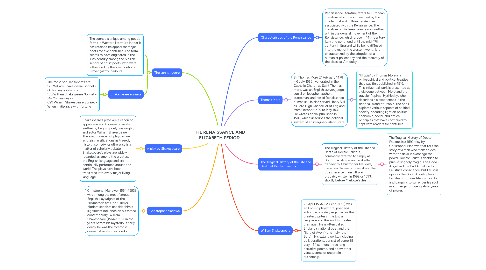
1. The sonnet genre
1.1. The sonnet is unique among poetic forms in Western literature in that it has retained its appeal for major poets for five centuries. The form seems to have originated in the 13th century among the Sicilian school of court poets, who were influenced by the love poetry of Provençal troubadours.
1.2. Shakespeare sonnets
1.2.1. The most popular sonnets are: 126 William Shakespeare Sonnet - O thou my lovely boy 130 William Shakespeare Sonnet - My Mistress' eyes 029 William Shakespeare Sonnet - When in disgrace with fortune
2. A play by Shakespeare
2.1. Shakespeare's plays are a canon of approximately 39 dramatic works written by English poet, playwright, and actor William Shakespeare. The exact number of plays as well as their classifications as tragedy, history, comedy, or otherwise is a matter of scholarly debate. Shakespeare's plays are widely regarded as among the greatest in the English language and are continually performed around the world. The plays have been translated into every major living language.
3. Characteristics of the Renaissance
3.1. Renaissance literature refers to European literature which was influenced by the intellectual and cultural tendencies associated with the Renaissance. The literature of the Renaissance was written within the general movement of the Renaissance, which arose in 14th-century Italy and continued until the mid-17th century in England while being diffused into the rest of the western world. It is characterized by the adoption of a humanist philosophy and the recovery of the classical Antiquity.
4. Christopher Marlowe
4.1. Christopher Marlowe (1564-1593) was among the most famous English playwrights of the Elizabethan era (1558-1642). Modern scholars consider him a significant influence on his famed contemporary, William Shakespeare (1564-1616); in the years before his mysterious early death, he was the foremost dramatist working in London.
5. Thomas More
5.1. Sir Thomas More (7 February 1478 – 6 July 1535), venerated in the Catholic Church as Saint Thomas More, was an English lawyer, judge, social philosopher, author, statesman, and noted Renaissance humanist. He also served Henry VIII as Lord High Chancellor of England from October 1529 to May 1532. He wrote Utopia, published in 1516, which describes the political system of an imaginary island state.
5.1.1. “Utopia” by Thomas More is a philosophical and political treatise that was first published in 1516. This influential work is presented as a dialogue between More and the traveler Raphael Hythloday, who describes his experiences in the fictional island of Utopia. The book explores various aspects of an ideal society, shedding light on political, economic, social, and ethical principles that have continued to captivate readers for centuries.
6. The Tragical History of the Life and Death of Doctor Faustus
6.1. The Tragical History of the Life and Death of Doctor Faustus, commonly referred to simply as Doctor Faustus, is an Elizabethan tragedy by Christopher Marlowe, based on German stories about the title character Faust. It was probably written in 1592 or 1593, shortly before Marlowe's death.
6.1.1. The Tragical History of Doctor Faustus is a 1592 play by Christopher Marlowe that tells the story of a man who makes a deal with the devil in exchange for power. Doctor Faustus decides to pursue ungodly magic. The Good Angel and the Bad Angel vie for Faustus’s conscience, but Faustus ignores the Good Angel’s pleas. Faustus summons Mephistophilis and bargains to surrender his soul in exchange for twenty-four years of power.