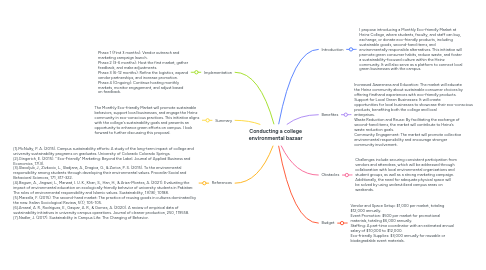
Conducting a college environmental bazaarpar Lin Fu
1. Implementation
1.1. Phase 1 (First 3 months): Vendor outreach and marketing campaign launch. Phase 2 (3-6 months): Host the first market, gather feedback, and make adjustments. Phase 3 (6-12 months): Refine the logistics, expand vendor partnerships, and increase promotion. Phase 4 (Ongoing): Continue hosting monthly markets, monitor engagement, and adjust based on feedback.
2. Summary
2.1. The Monthly Eco-friendly Market will promote sustainable behaviors, support local businesses, and engage the Heinz community in eco-conscious practices. This initiative aligns with the college's sustainability goals and presents an opportunity to enhance green efforts on campus. I look forward to further discussing this proposal.
3. References
3.1. [1].McNulty, P. A. (2015). Campus sustainability efforts: A study of the long-term impact of college and university sustainability programs on graduates. University of Colorado Colorado Springs. [2].Gingerich, E. (2015). " Eco-Friendly" Marketing: Beyond the Label. Journal of Applied Business and Economics, 17(3). [3].Slavoljub, J., Zivkovic, L., Sladjana, A., Dragica, G., & Zorica, P. S. (2015). To the environmental responsibility among students through developing their environmental values. Procedia-Social and Behavioral Sciences, 171, 317-322. [4].Begum, A., Jingwei, L., Marwat, I. U. K., Khan, S., Han, H., & Ariza-Montes, A. (2021). Evaluating the impact of environmental education on ecologically friendly behavior of university students in Pakistan: The roles of environmental responsibility and Islamic values. Sustainability, 13(18), 10188. [5].Marzella, F. (2015). The second-hand market: The practice of reusing goods in cultures dominated by the new. Italian Sociological Review, 5(1), 105-105. [6].Amaral, A. R., Rodrigues, E., Gaspar, A. R., & Gomes, A. (2020). A review of empirical data of sustainability initiatives in university campus operations. Journal of cleaner production, 250, 119558. [7].Nadler, J. (2017). Sustainability in Campus Life: The Changing of Behavior.
4. Introduction
4.1. I propose introducing a Monthly Eco-friendly Market at Heinz College, where students, faculty, and staff can buy, exchange, or donate eco-friendly products, including sustainable goods, second-hand items, and environmentally responsible alternatives. This initiative will promote green consumer habits, reduce waste, and foster a sustainability-focused culture within the Heinz community. It will also serve as a platform to connect local green businesses with the campus.
5. Benefites
5.1. Increased Awareness and Education: The market will educate the Heinz community about sustainable consumer choices by offering firsthand experiences with eco-friendly products. Support for Local Green Businesses: It will create opportunities for local businesses to showcase their eco-conscious products, benefiting both the college and local enterprises. Waste Reduction and Reuse: By facilitating the exchange of second-hand items, the market will contribute to Heinz’s waste reduction goals. Community Engagement: The market will promote collective environmental responsibility and encourage stronger community involvement.
6. Obstacles
6.1. Challenges include securing consistent participation from vendors and attendees, which will be addressed through collaboration with local environmental organizations and student groups, as well as a strong marketing campaign. Additionally, the need for adequate physical space will be solved by using underutilized campus areas on weekends.
7. Budget
7.1. Vendor and Space Setup: $1,000 per market, totaling $12,000 annually. Event Promotion: $500 per market for promotional materials, totaling $6,000 annually. Staffing: A part-time coordinator with an estimated annual salary of $10,000 to $12,000. Eco-friendly Supplies: $3,000 annually for reusable or biodegradable event materials.