


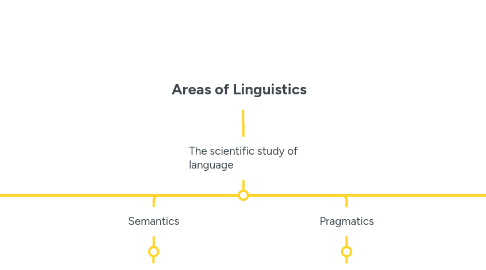
1. The scientific study of language
1.1. Phonetic
1.1.1. 1. Studies speech sounds 2. Classifies sounds based on production and perception
1.1.1.1. Divided into: Articulatory phonetics (how sounds are produced) Acoustic phonetics (physical properties of sounds) Auditory phonetics (how sounds are perceived)
1.2. Phonology
1.2.1. 1. Studies sounds in terms of their function in language 2. Analyzes phonemes (smallest distinctive units) Examines sound patterns in a language
1.3. Morphology
1.3.1. 1. Analyzes the internal structure of words 2. Identifies morphemes (smallest units with meaning) 3. Differentiates between simple, derived, and compound words
1.4. Syntax
1.4.1. Studies sentence structure Analyzes relationships between words and phrases Determines grammatical rules of a language
1.5. Semantics
1.5.1. Studies the meaning of words and sentences Analyzes relationships such as synonyms, antonyms, and polysemy Examines how context affects meaning
1.6. Pragmatics
1.6.1. Studies language use in context Analyzes speech acts, inferences, and implied meaning Examines how language adapts to different situations Sociolinguistics
1.7. Sociolinguistics
1.7.1. Analyzes the relationship between language and society Studies linguistic variations based on social group, age, gender, etc. Examines dialects, slang, and bilingualism
1.8. Psycholinguistics
1.8.1. Studies the relationship between language and the mind Analyzes language acquisition and processing Examines language disorders and learning processes
1.9. Neurolinguistics
1.9.1. Studies the relationship between language and the brain Analyzes brain areas involved in language Examines neurological speech disorders
1.10. Speech Organs
1.10.1. Involved in language production Oral cavity (tongue, lips, teeth, palate) Nasal cavity (sound resonance) Vocal cords (voice production) Lungs (provide airflow for speech)