


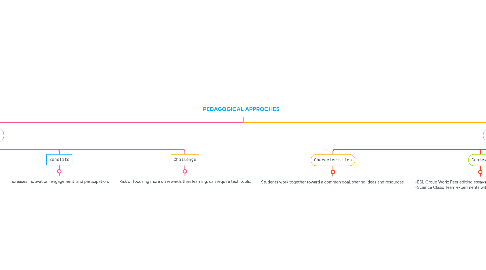
1. :zap: Geistesblitze
1.1. Pedagogical Approches
2. Project Base Learning
2.1. Characteristics
2.1.1. Long-term projects, real-world problems, collaboration, inquiry-based.
2.2. Contexts
2.2.1. ESL Classrooms: Students create travel brochures in English.
2.3. Benefits
2.3.1. Encourages critical thinking, deep learning, teamwork.
2.4. Challenges
2.4.1. Time-consuming, requires resources and planning.
3. Gamification
3.1. Characteristics
3.1.1. Uses game elements such as: points, badges, leaderboards to motivate learning.
3.2. Context
3.2.1. •Online Learning: Quizzes and interactive challenges with rewards. •Primary School: Vocabulary games to practice new words.
3.3. Benefits
3.3.1. Increases motivation, engagement, and participation.
3.4. Challenge
3.4.1. Risk of focusing more on rewards than learning, can require tech tools.
4. Collaborative Learning
4.1. Characteristics
4.1.1. Students work together toward a common goal, sharing ideas and resources.
4.2. Context
4.2.1. •ESL Group Work: Peer editing essays and role-playing conversations. •Science Class: Team experiments with shared lab reports.
4.3. Benefits
4.3.1. Builds social skills, communication, shared responsibility.
4.4. Challenge
4.4.1. Unequal participation, conflicts among group members.
5. Hybrid
5.1. Characteristics
5.1.1. Combines in-person and online instruction, flexible learning pace.
5.2. Context
5.2.1. •Higher Education: Lectures online, lab work in-person. • Adult ESL: Online grammar modules + classroom conversation practice.
5.3. Benefits
5.3.1. Flexible, caters to diverse learning styles, allows review of materials.
5.4. Challenge
5.4.1. Requires strong tech skills, possible digital divide issues.