

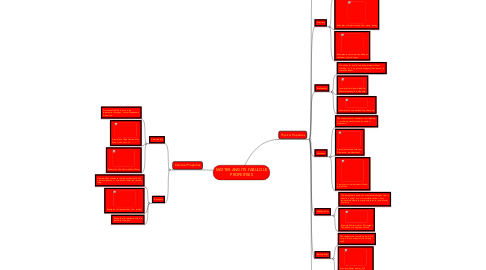
1. Chemical Properties
1.1. Flammability
1.1.1. A material's ability to burn in the prescence of oxygen, or its willingness to be on fire.
1.1.2. Examples of high flammability: Wood, alcohol, oils
1.1.3. Example of low flammability: Water
1.2. Reactivity
1.2.1. How readily a substance combines chemically with other substances, or how easily it does the reaction thing.
1.2.2. Examples of high reactivity: Iron, sodium
1.2.3. Example of a substance with low reactivity: Nitrogen
2. Physical Properties
2.1. Conductivity
2.1.1. A material's ability to allow heat to flow, or, as I prefer, temperature balance.
2.1.2. Example for high conductivity: Metal
2.1.3. Example for low conductivity: Wood
2.2. Viscosity
2.2.1. The dendency of a liquid to keep from flowing, or an abject resistence to it.
2.2.2. Examples of high viscosity: Corn syrup, honey
2.2.3. Examples for low viscosity: Vinegar, methanol, liquid nitogen
2.3. Malleability
2.3.1. The ability for a solid to be hammered without breaking, or, in my grossly oversymplified words, its overall softness.
2.3.2. Examples for high malleability: Metal, playdough, toothpaste
2.3.3. Examples for low malleability: Glass, ice
2.4. Hardness
2.4.1. The resistance oif a substance to scratching, or not being easily marred by another substance.
2.4.2. Examples for high hardness: Diamonds, stainless steel
2.4.3. Examples for low hardness: Wood, gel, pillows
2.5. Melting Point
2.5.1. The temperature at which a substances changes from a solid to a liquid, or, as I mournfully define it, that temperature where your popsicle turns to juice all over your shirt.
2.5.2. Example: Water melts at 32 degrees Fahrenheit, or 0 degrees Celcius.
2.6. Boiling Point
2.6.1. The temperature something boils. Oh, sorry, did you expect me to simplify that?
2.6.2. Example: Water boils at 212 degrees Fahrenheit, or 100 degrees Celcius.
2.7. Density
2.7.1. The ratio of a material's mass to its volume. Y'know, that ratio thing.
2.7.2. Example for high density: Concrete
2.7.3. Example for low density: Hydrogen