

MEDIA
por Kristine Canare
1. The Film Form
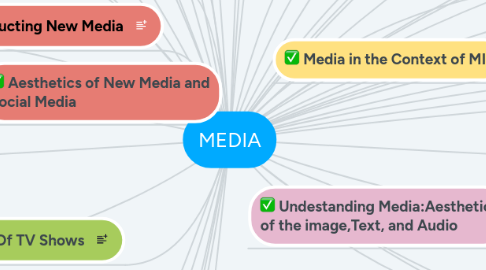
2. Understanding Media:Aesthetics of film and TV
3. Film Format
3.1. Narrative
3.2. Documentary
3.3. Animation
3.4. Experimental
3.5. Film Image Composition
3.5.1. The relation of objects and people
3.5.2. The play of light and dark
3.5.3. The color and their patterns
3.5.4. The position of the camera and the angles used to frame the subjects.
4. TV Broadcast
4.1. Motion film Concept
4.1.1. Pan
4.1.2. Tilt
5. Kind Of TV Shows
5.1. INformative Programming
5.2. Entertainment Programming
6. The Anatomy of Advertising
7. Crafting Audiovisual Media Messages
8. Creating Meaning in Audio Production
9. Creating Meaning in Image Production
9.1. Modes of Film Production
10. Creating Meaning in Audiovisual Production
11. Aesthetics of New Media and Social Media
12. Deconstructing New Media
13. New Media Technology: Convergence and Characteristic
14. New Media as Multimedia
15. New Media Transitions: Synergy to Transmedia
16. Transitioning Media,Transitioning User
17. Deconstructing Social media
18. What is social Netwokring?
19. Kind Of Social Media and Its Varying uses
19.1. Print Based
19.2. Auto-Based
19.3. Photo-Based
19.4. Video-Based
19.4.1. Social Networking Sites
19.5. Call and Chat Based
20. Relevance of Social Media in Today's Society
20.1. Personal Communications
20.2. Business and Costumer Care Tools
20.3. Social Service and Governace
20.4. Educational tools
20.5. Advocacy Campaign for Social Changes
20.6. Traditional Media Coverage and Social Media enchancement
20.7. Entertainment Portals
21. Intersecting Traditional Media,New Media,And Social Media Networking
22. Journalism + Internet=Blogging
23. Broadcasting+internet=Podcast
24. Film +Internet =Youtube
25. TV Internet= streaming Media
26. Advertising + Social Media=Social Media Influencers
26.1. Social media celebrities/Professional Bloggers
26.2. Thoughts Leaders/Independent Voices
26.3. Everyday Influencer
26.4. Brand Advocates
27. MIL THEMATIC COVERAGE
27.1. DIFFERENT MEDIA LITERACY (MIL) AND INFORMATION
27.1.1. MEDIA AND INFORMATION SOURCE
27.1.1.1. Media and Information Languages
27.1.1.1.1. Literacies of the 21st Century
28. UNESCO FIVE LAWS OF MEDIA
28.1. LAW:1
28.1.1. LAW:2
28.1.1.1. LAW:3
28.1.1.1.1. LAW :4
29. The Path to Becoming a Media and Information Literate Individual
29.1. having an improved quality of life
29.2. having greater political participation
29.3. having better economic opportunities
29.4. creating an improved learning environment
29.5. developing more cohesive social units
30. Debunking Media Literacy Myths
31. Mass Media and Mass Communication
31.1. Media as an Information Industry
31.2. Media as a Culture of Entertainment
32. Types of Media
32.1. Traditional Media
32.2. New Media
32.2.1. Social media
32.2.2. Mobile Communication Technology