

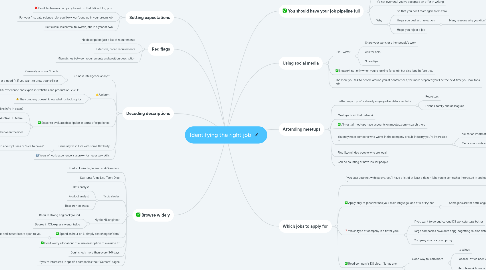
1. Setting expectations
1.1. Don't fantasize a company based on that talk or blog post
1.2. For your first data science role, you likely won't end up in your dream job
1.3. Be flexible, it's normal to switch jobs in a year or two
2. Red flags
2.1. No description: just a list of requirements
2.2. Extensive, broad requirements
2.3. Mismatches between requirements and position description
3. Decoding descriptions
3.1. Business intelligence analyst
3.1.1. Generally you won't code
3.1.2. Not a good fit if you want to grow your skillset
3.2. Unicorn
3.2.1. Ph.D in CS with a lot of DS experience and expert in statistics and production-level ML
3.2.2. The company doesn't know what it's looking for
3.3. Better to evaluate description in terms of experience
3.3.1. Build a dept and has no data pipeline infra in place?
3.3.2. Or looking for a fifth member for its productive DS team?
3.3.3. Read between the lines
3.3.3.1. Work hard and play hard: long hours
3.3.3.2. Self-starter and independent: won't get alot of support
3.4. Generally wish lists with some flexibility
3.4.1. Don't worry too much about plusses or "nice to haves"
3.5. Years of work experience is a proxy for necessary skills
4. Browse widely
4.1. Start at LinkedIn, Indeed and Glassdoor
4.2. Startups: AngelList, Tech: Dice
4.3. Typical roles
4.3.1. Data analyst
4.3.2. Product analyst
4.3.3. Research scientist
4.4. My fit: ML engineer
4.4.1. Require strong eng background
4.4.2. Degree in CS, exp as sw engr helps
4.5. Spend an hour on LI simply searching for"data"
4.5.1. Gives a sense of what jobs and industriesare open to you
4.6. Don't worry a lot about title, use description to evaluate fit
4.7. Don't check more than every 3-5 days
4.8. If you're interested in specific companies,their "Careers" pages
5. You should have your job pipeline full
5.1. Multiple opportunities at each stage
5.2. It's not over until you've accepted an offer in writing
5.3. Why
5.3.1. So that you don't start again from zero
5.3.2. Helps you deal with rejection
5.3.2.1. Many reasons why you didn't get the job may be out of your control
5.3.3. Helps you reject a job
6. Using social media
6.1. Use Twitter
6.1.1. Share your work, or other people's work
6.1.2. Ask for help
6.1.3. Share tips
6.2. Network not only when you're looking for a job, but also long before that
6.3. The more you talk to people around you at conferences, the more prepared you'll be the next time you look for a job
7. Attending meetups
7.1. Better ways if you're already employed as data scientists
7.1.1. Recruiters
7.1.2. Friends, family and colleagues
7.2. Meetups build that network
7.3. Almost all meetups have accounts on meetup.com - search there
7.4. You may meet someone who works in the company or sub-industry you're interested in
7.4.1. ask for an informational interview
7.4.2. Get a look inside a company and getadvice from someone who's in the field
7.5. Find like-minded people who are local
7.6. Can be daunting or have insular people
8. Which jobs to apply for
8.1. If you cast your net wide above, you'll have a list of at least a dozen jobs you're somewhat interested in and could be a good fit for
8.1.1. Don't start applying yet!
8.1.2. See filters below
8.2. Apply only to jobs that use your main language: one of R or Python
8.2.1. Some jobs ask for both languages: bewary!
8.2.1.1. People use either language, not thateveryone knows both!
8.2.1.2. Can make collaborating difficult
8.2.1.3. At the least, ask for the split
8.3. Which type of company is a fit for you?
8.3.1. If you want to do end-to-end DS work,startups better
8.3.2. Large companies have data engg, sogetting routine data is fast and easy
8.3.3. Company size is a good proxy
8.4. Read company's DS blog, if it has one!
8.4.1. Good way to learn more
8.4.1.1. Its values
8.4.1.2. Foosball, office beer, catered dinners =>young employees
8.4.1.3. Flexible work hours or family leave =>parent friendly
8.4.2. In cover letter, include your comments on specific posts there