


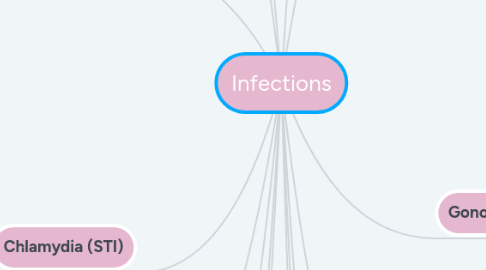
1. TORCH
1.1. Toxoplasmosis
1.1.1. Treat with Sulfonamides
1.1.1.1. sulfadiazine, sulfamethizole, sulfisoxazole
1.2. Other infections(such as syphilis, varicella, parvovirus 19)
1.2.1. Treat based on the disease process
1.3. Rubella
1.3.1. No known treatment
1.3.1.1. Treat Symptoms
1.4. Cytomegalovirus
1.4.1. Treat with antivirals “ovir’s
1.5. Herpes
1.5.1. Active outbreak must have a surgical birth
1.5.1.1. Treat with antivirals the "ovirs"
2. Cytomegalovirus
2.1. May or may not affect the pregnant client
2.2. May or may not treat the pregnant client with an antiviral
2.3. Can cause death to the fetus
2.4. Neonates may manifest: rash, jaundice, microcephaly, Intrauterine growth restriction (IUGR), low birth weight Retinitis( damage to the retina), blindness, hearing loss
2.4.1. Long term: hearing loss, development delay, vision loss(blindness) seizure, microcephaly
2.5. At birth can test the newborns saliva or urine
2.6. May treat with antivirals such as ganciclovir, valganciclovir, acyclovir etc
3. GBS +
3.1. Group B streptococcus ß-hemolytic (GBS) is a bacterial infection that can be passed to a fetus during labor and delivery
3.2. Physical Assessment Findings
3.2.1. Positive GBS may have maternal and fetal effects, including premature rupture of membranes, preterm labor and delivery, chorioamnionitis, infections of the urinary tract, maternal sepsis, and can cause endometritis after delivery
3.3. If transferred to the neonate it can cause: pneumonia, respiratory distress, fetal sepsis, and meningitis
3.4. Vaginal/rectal culture at 35-37 weeks gestation
3.4.1. Laboratory Test
3.4.1.1. We do this closer to delivery because it will be more accurate
3.5. Treat with IV antibiotics during the labor process. We treat with IV antibiotics as it is more effective intravenously. Patients in labor often vomit, so PO would not be effective.
3.5.1. IV: Penicillin/Ampicillin
4. Chlamydia (STI)
4.1. STI/Bacterial infection
4.2. Can progress to Pelvic Inflammatory disease and infertility if not treated
4.3. Manifestations
4.3.1. Grey-white discharge
4.3.1.1. Dysuria
4.3.1.1.1. Spotting/postcoital bleeding
4.4. TX
4.4.1. Doxycycline- contraindicated in pregnancy
4.4.2. Azithromycin (Zithromax) and amoxicillin (Amoxil) are prescribed during pregnancy
4.4.2.1. Typically in one dose
5. Syphilis
5.1. Caused by bacterium treponema pallidum
5.1.1. Can have long-term complications if not treated
5.2. Lab tests: VDRL, rapid plasma reagin(RPR)
5.2.1. RPR non-reactive/negative = negative for syphilis
5.2.1.1. Does not now, and has never had syphilis
5.3. RPR reactive/positve=postive for syphilis
5.3.1. Client may have an active infection
5.3.1.1. However, once they have had syphilis, it may still show positive for years even after being treated
5.3.1.1.1. The higher the titer the more likely there is an active infection
5.4. TX
5.4.1. Penicillin G IM, in a single dose
6. Bacterial Vaginosis (BV)
6.1. Caused by Haemphilus vaginalis, or Gardenella
6.2. May or may not be sexually transmitted
6.3. If untreated can lead to PID, and infertility
6.4. Manifestations
6.4.1. Asymptomatic
6.4.1.1. Itching
6.4.1.1.1. Foul smelling discharge
6.5. DX
6.5.1. Sample of vaginal discharge on PH paper
6.6. TX
6.6.1. Antifungal
6.6.1.1. "Zoles"
7. Herpes Genitalis (HSV-2)
7.1. Infection occurs with direct contact with infected person
7.2. Within 2-12 days after the primary infection, blisters may appear
7.3. The virus remains dormant in the nerve ganglia
7.4. Diagnosis based on clinical signs, blood test for HSV-2
7.5. No cure exists, but antivirals such as Zovirax(acyclovir), Valacyclovir(Valtrex) may suppress/reduce symptoms
7.6. Client must have a surgical birth with an active HSV-2 outbreak
8. Chorioamnionitis
8.1. A bacterial infection of the amniotic cavity
8.1.1. Causes: IUCP, cervical exams, amniocentesis, PROM
8.1.1.1. Can result in endometritis and sepsis
8.2. Manifestations: fever (100.4 or greater), leukocytosis, tachycardia, malodorous amniotic fluid, fetal tachycardia
8.3. Therapeutic Management: Blood cultures(before antibiotic), antibiotics will be started(will change later if needed based on organism)
8.4. TX
8.4.1. IV: Ampicillin/gentamycin/clindamycin
8.5. May need to deliver the baby
8.5.1. Baby may require cultures and antibiotic treatment based on status
9. Prompt identification is imperative
9.1. Benefits of treatment outweighs the risks
9.1.1. All should be treated in pregnancy except HPV
9.1.1.1. Most must be reported to the local health department
10. HIV
10.1. Standard Precautions
10.2. HIV/AIDS clients should continue their retroviral medications
10.3. Procedures were there is a risk of blood crossing should be avoided
10.3.1. Amniocentesis
10.3.1.1. Episiotomy
10.3.1.1.1. Internal Fetal Monitoring
10.4. Surgical birth for high viral load
10.5. Mother is instructed to not breastfeed
10.6. Newborn should be given retroviral medications
10.7. Bathe newborn before giving any injections
11. STI's
11.1. The effects of STI’s are similar amongst the different STI’s
11.2. Client with an STI may have a distinctive leukorrhea(vaginal discharge)
11.3. Expected leukorrhea in pregnancy is often mucoid
11.4. STI’s:
11.5. Can cause low birth weight
11.6. Can cause preterm labor
11.7. Can cause fetal sepsis
11.8. Can lead to pelvic inflammatory disease and infertility
11.9. Health promotions of STI’s are similar amongst the different STI’s
11.10. If your client is not pregnant, antibiotics can reduce the effectiveness of birth control pills
11.11. Clients and partners must be treated, and retested typically within 3 weeks
11.12. Educate on taking the full course of antibiotics
11.13. Educate on sex practices
11.14. STI’s must be reported to the local health department
12. Gonorrhea(STI)
12.1. STI/Bacterial infection
12.2. Untreated gonorrhea in pregnancy can result in low birth weight, premature birth, and infections such as Chorioamnionitis.
12.2.1. If gonorrhea is left untreated, it can cause pelvic inflammatory disease(PID), heart disease, arthritis, and infertility
12.3. Manifestations
12.3.1. Often asymptomatic
12.3.2. Yellow-green vaginal discharge
12.3.2.1. Dysuria
12.3.2.1.1. Bleeding between menstural cycles
12.4. DX
12.4.1. Urine culture
12.4.2. Cervical/endocervical culture
12.5. TX
12.5.1. Broad spectrum antibiotic
12.5.1.1. Ceftriaxone (Rocephin) IM and azithromycin (Zithromax) PO
12.5.1.1.1. Typically in one dose
13. Trichomoniasis
13.1. Protozoan parasite
13.2. If untreated can lead to PID and Infertility
13.3. Manifestations
13.3.1. Yellow-green frothy discharge with foul odor
13.3.1.1. Dysuria/painful intercourse
13.3.1.1.1. Vaginal itching
13.4. DX
13.4.1. Wet mount microscopy
13.5. TX
13.5.1. Antifungal such as metronidazole, the “zoles”
13.5.2. Avoid alcohol with this medication
14. Candida Albicans
14.1. Fungal infection(yeast)
14.2. Over the counter treatments available, but pregnant clients should not treat themselves, notify provider
14.3. TX
14.3.1. Fluconazole
14.4. Client Education
14.4.1. Health Promotion and Disease Prevention
14.4.1.1. Instruct the client to avoid tight-fitting clothing
14.4.2. Instruct the client to wear cotton-lined underpants
14.4.3. Instruct the client to limit wearing damp clothing
14.4.4. Instruct the client to void before and after intercourse and avoid douching
15. Human Papillomavirus
15.1. Condyloma and cancers
15.1.1. Can cause genital warts
15.1.1.1. Warts on cervix
15.2. Lab tests: PAP, clinical findings based on appearance
15.3. Routine screening
15.3.1. Prevention measures in adolescents
15.4. TX
15.4.1. Not treated during pregnancy
15.4.1.1. Colposcopy
15.4.1.1.1. Risks during pregancy do not outweigh the benefits of treatment