


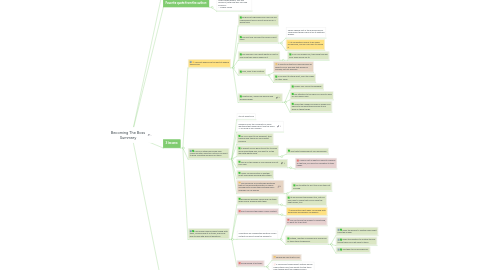
1. 1-Sentence-Summary:
1.1. Becoming The Boss shows leaders of all kinds, whether new or experienced, how to identify the pitfalls that stand in the way of influencing others for the better and overcome them.
2. Favorite quote from the author:
2.1. "How well you are capable of leading other people begins, first and foremost, with how well you lead yourself." - Lindsey Pollak
3. 3 lessons:
3.1. The best leaders are the best at leading themselves.
3.1.1. Be good at organizing your own life and improvement as you are at doing so for a whole team
3.1.2. The first rule you want to follow is don’t panic.
3.1.2.1. Things change fast in the business world. Technology throws ideas at us at lightning speeds.
3.1.2.2. It’s completely normal to be afraid occasionally, and you can learn to handle it.
3.1.3. Ask yourself if you want what’s in front of you more than you’re afraid of it.
3.1.3.1. If you can answer yes, then push through your fears and go for it!
3.1.4. Also, learn to be creative.
3.1.4.1. It used to be that you could become an expert in your field and that would be enough, but not anymore.
3.1.4.2. If you want to stand apart, learn the ropes of other fields.
3.1.5. Additionally, always be learning and working harder.
3.1.5.1. Assess your current knowledge.
3.1.5.2. Pay attention to the skills you need to work on and make a plan.
3.1.5.3. Check the LinkedIn profiles of people you admire to see what they’re good at and work on those things.
3.2. Focus on others and make your communication skills top-notch if you want to have a positive influence on them.
3.2.1. It’s not about you!
3.2.2. Research from the University of Texas identified that leaders don’t use the word “I” as much as non-leaders.
3.2.3. So if you want to be excellent, stop thinking and talking so much about yourself!
3.2.4. It doesn’t do any good to just try to avoid doing something bad, you want to fill the gap with what’s good.
3.2.4.1. And that’s thinking about your employees.
3.2.5. Focus on the needs of your people and not your own.
3.2.5.1. If you’re lost in what you need to improve all the time, you won’t be receptive to their needs.
3.2.6. Under-communication is another must-avoid when working with others.
3.2.7. One survey by Accountemps identified that not communicating often or openly enough hurts morale than anything else a manager can do wrong!
3.2.7.1. So it’s better to do it too much than not enough.
3.3. Use people’s names when talking with them, avoid gossip at all times, and know how to deal with difficult questions.
3.3.1. Remember people’s names and use them when you’re speaking with them.
3.3.1.1. It’s an excellent persuasion tool, but you also need to check that you’re using the right names, too!
3.3.2. Don't overlook the power of eye-contact.
3.3.2.1. Building this habit when conversing with employees will express confidence.
3.3.3. Sometimes an unexpected question comes up that you won’t know the answer to.
3.3.3.1. You can’t know the answer to everything, so don’t try to do that.
3.3.3.2. Instead, maintain confidence by using one of these three techniques:
3.3.3.2.1. Refer the person to another who might have the answer.
3.3.3.2.2. Defer the question to another time by telling them you’ll get back to them.
3.3.3.2.3. Ask them to be more specific.
3.3.4. Avoid gossip at all times.
3.3.4.1. People will lose trust in you
3.3.4.2. If someone's talking about another person behind their back, then what’s to stop them from talking about you behind yours?!