


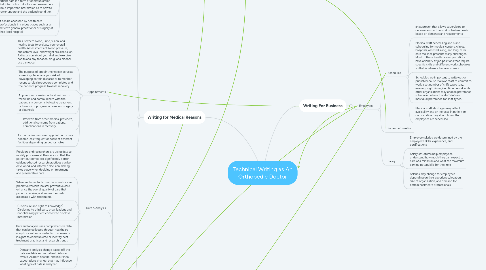
1. Writing for Medical Reasons
1.1. Pharmacist
1.2. Health-care Professionals
1.2.1. Doctor Notes
1.2.1.1. A medical note is an entry into a medical or health record made by a physician, nurse, lab technician or any other member of a patient’s healthcare team. Accurate and complete medical notes ensure systematic documentation of a patient’s medical history, diagnosis, treatment and care.
1.2.1.2. Doctor notes are set up to ensure that medical charts are complete and accurate. It can be seen as a digital version of a patient’s paper medical chart.
1.2.1.3. It is a real-time record that makes health information available instantly and securely to authorized users. EHRs are built to share medical notes with other health care providers and organizations so they contain information from all involved in a patient’s care.
1.2.1.4. Medical history and the frequency of your visits with a health professional influence the doctor notes
1.2.1.5. Doctor notes are a form of communication and record keeping that track patient medical history and current issues
1.2.2. Prescriptions
1.2.2.1. Formal communication from doctor to pharmacist or other health care professional authorizing them to dispense a specific prescription drug to the patient it’s being written for.
1.2.2.2. The purpose of the medical prescription is to communicate with the pharmacist or other heath-care professional of the prescription drug that’s been prescribed to the patient, with the correct amount and dosage to give the patient.
1.2.2.3. Medical Prescriptions are written to the pharmacist to help cure the patient. It will also provide information on how to properly take the medication ex. how many times a day, what time a day, with food or without. As well as a list of side effects you may develop while taking the medication.
1.2.2.4. Many events influence a medical prescription, medical diagnosis after a doctor or health-care professional examines you, determines and influences what medication will be prescribed for you to help heal you or control your injury.
1.2.3. Patient Data
1.2.3.1. Patient data is medical information held about an individual patient. Patient data may include information relating to their past and current health or illness, their treatment history, lifestyle choices and genetic data.
1.2.3.2. This type of patient data is also used for research to help identify effective treatments, monitor the safety of medicines, and generate new knowledge about the causes of disease and illness.
1.2.3.3. Patient data is a form of communication that informs both doctors and researchers about important information as to how to better understand the patient’s condition
1.2.3.4. It can be accessed by health care professionals in various places such as a patient’s general practitioner or surgery at their local hospital.
1.3. Patients
1.3.1. Appointments
1.3.1.1. This is where blood, urine, vision, and hearing tests to evaluate your overall health. Assessments of blood pressure, cholesterol level, and weight are also taken. A discussion about your diet and exercise habits and any tobacco, drug, and alcohol use can occur.
1.3.1.2. The purpose of appointments can serve as screenings to assess your risk of developing certain diseases or to monitor recent surgical procedures completed and the patient’s progress towards recovery
1.3.1.3. Appointments are issued and written to follow up and communicate with the patient any concerns following treatment or to monitor progress on a recent surgery or diagnosis
1.3.1.4. Referrals from other medical providers, additional concerns from patient, complications in recovery,
1.3.1.5. As the patient recovers, appointments may become less frequent or occur at different facilities depending on doctor notes
1.3.2. Data & Analysis
1.3.2.1. Providers and researchers are using data to modify processes at their sites so that the patient outcomes are significantly better, evidence-based research practices can be developed, and informed decision making takes place when deciding on treatment and preventative care.
1.3.2.2. When implemented correctly, analytics can predict outbreaks, bolster preventive care, enhance the overall quality of care that patients receive, and lessen the costs associated with treatments.
1.3.2.3. (Disclosure and right to knowledge) – Disclosing to third party organizations and not obtaining patient consent to disclose information
1.3.2.4. Data and analysis uses comprehensive data that can be collected through healthcare analytics can be converted into numerous insights to communicate or identify best treatment practices and research trends
1.3.2.5. Data and analysis change based off the data available and as patient histories evolve. As both hospital and insurance expectations change, that may influence what type of data is analyzed.
1.3.3. Medical Prescriptions
1.3.4. Discharge Note
1.3.4.1. Discharge summaries are an invaluable resource that may improve patient outcomes by providing for continuity and coordination of care and a safe transition to other care settings and providers.
1.3.4.2. It serves as the primary mode of communication between the hospital care team and aftercare providers in a timely manner.
1.3.4.3. You can receive discharge notes from a primary care provide at a medical facility, Physical therapy treatment center, or hospital
1.3.4.4. Discharge notes are a form of communication to other healthcare providers to include important information to the aftercare providers. An essential component is identifying those laboratory or other tests for which final results remain pending at the time of discharge
1.3.4.5. Communications via the discharge summary should both improve and increase since it provides a smooth and long-lasting transition of the patient to the next level of care and helps avoid miscommunication or delays in care that may lead to poor outcomes.
1.3.4.6. One research study found that “In 2019, we saw an increase in PCPs who received a hospital discharge summary compared to 2018”
1.3.5. Care plans
1.3.5.1. is a document that specifies your assessed unique individual needs and outlines what type of support you should get, how the support will be given, as well as who should provide it.
1.3.5.2. Identifies care needs, types of support, desired outcomes, records of care, personal preferences, costs of services
1.3.5.3. A care plan is a form of written communication between patient, doctor, and other forms of medical care that helps a patient’s family and other loved ones to understand their wishes and how they can support them as well. It is relaying important and necessary information
1.3.5.4. As patient and doctor get a better understanding of the medical condition and live as independently as possible and have more control over their life, care plans may be adjusted to suit the patient’s needs and preferences and they improve or decline.
2. Writing For Business
2.1. Employees
2.1.1. Schedules
2.1.1.1. an approach that allows supervisors to determine what the work schedule needs based on demands and requirements
2.1.1.2. Medical staff scheduling and nurse scheduling for medical centers, clinics, hospitals, assisted living, and long-term care facilities presents many challenges. Most of these healthcare organizations have a variety of job positions that require specific skills and different work schedules so that is where schedules come in
2.1.1.3. Schedules are important to write out or publish because it allows staff to commit to work a set number of shift types (day, evening, night) in a given time period while other organizations may choose preference scheduling where the staff defines individual preference for shift types.
2.1.1.4. Medical staff shortages may affect availability and an increase in patient to doctor ratios may affect how often employees are scheduled
2.1.2. Patient information
2.1.3. Salary
2.1.3.1. Employee salaries are determined by the employee’s skills, experience, and certifications
2.1.3.2. Salary structures help employees understand how much they can expect to earn at a minimum and what the maximum earning potential is for their role.
2.1.3.3. Salaries may change for employees depending on their experience, location, size of organization, and demand for certain healthcare professionals