


1. นางสาวธีร์สุดา สวัสดิ์ผล
2. 643050330-9
3. สาขาวิชาการสอนภาษาไทย
4. กลุ่มเรียนที่ 3
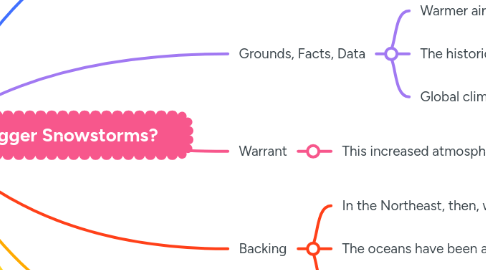
5. Claim
5.1. A Warming Climate Can Bring Bigger Snowstorms
5.1.1. เป็นหัวข้อที่สามารถถกเถียงกันได้
5.2. The sharp increase in high-impact Northeast winter storms is an expected manifestation of a warming climate. It’s another risk the U.S. will have to prepare for as extreme events become more common with climate change.
5.2.1. เป็นความคิดเห็นของผู้เขียนที่กล่าวถึงพายุหิมะว่ามีแนวโน้มที่จะเพิ่มขึ้นอันเป็นผลมาจากสภาวะโลกร้อน
6. Grounds, Facts, Data
6.1. Warmer air can hold more moisture than cold air. The physical law that explains this relationship is known as the Clausius-Clapyron relation.
6.1.1. เป็นข้อมูลที่กล่าวว่าอากาศอุ่นสามารถเก็บความชื้นได้มากกว่าอากาศเย็น และมีการกล่าวถึงกฎ Clausius-Clapyron ที่อธิบายถึงความสัมพันธ์นี้
6.2. The historical blizzard that buried Boston under nearly 2 feet of snow in January 2022 was fueled by ocean waters in the western Atlantic that are warmer than normal.
6.2.1. เป็นข้อมูลที่กล่าวว่า พายุหิมะที่เคยเกิดขึ้นในประวัติศาสตร์ถูกกระตุ้นจากน้ำในมหาสมุทรที่มีอุณหภูมิอุ่นกว่าปกติ
6.3. Global climate models project an increase in the most extreme snowfall events across large areas of the Northern Hemisphere with future warming.
6.3.1. โมเดลภูมิอากาศรอบโลกแสดงให้เห็นว่ามีพายุหิมะที่รุนแรงเกิดขึ้นทั่วทั้งซีกโลกเหนือและมีแนวโน้มที่อุณหภูมิจะอุ่นขึ้นอีก
7. Warrant
7.1. This increased atmospheric moisture is helping to intensify the water cycle. The Northeast has seen an increase of more than 50% in the heaviest precipitation events in recent decades, the largest increase of any region of the U.S
7.1.1. เป็นข้อมูลที่สื่อให้เห็นว่าความชื้นในบรรยากาศที่มากขึ้นทำให้วัฏจักรน้ำรุนแรงขึ้นและเป็นผลให้สภาพลมฟ้าอากาศรุนแรงขึ้น
8. Backing
8.1. In the Northeast, then, we have an environment that has warmed yet is often still below freezing. Put another way, regions of the world that are cold enough for snow have warmed enough to now be visited by storms capable of holding and dropping more moisture. Rather than intense downpours, the region gets heavy snow.
8.1.1. ในภาคตะวันออกเฉียงเหนือ แม้จะมีอุณหภูมิที่อุ่นขึ้นแต่ในขณะเดียวกันก็ยังมีอุณหภูมิที่ต่ำพอจะเกิดน้ำแข็ง กล่าวอีกอย่างคือพื้นที่บริเวณนี้แทนที่จะเกิดพายุปกติกลับเกิดพายุหิมะที่รุนแรงแทน
8.2. The oceans have been absorbing more than 90% of the additional heat attributable to rising atmospheric greenhouse gases from human activities, particularly burning fossil fuels. The oceans now contain more heat energy than any time since measurements began six decades ago.
8.2.1. มหาสมุทรดูดซับก๊าซเรือนกระจกมากกว่า 90% ทำให้มีพลังงานความร้อนสูงกว่าที่เคยมีมาใน 6 ทศวรรษ
8.3. nor’easters gain energy from sharp temperature gradients where cold and warm air masses meet. The frequency of cold air outbreaks is another aspect of climate change that may be contributing to recent increases in extreme snowfall events.
8.3.1. ความถี่ในการเกิดมวลอากาศเย็นเป็นอีกหนึ่งเหตุการณ์ที่เกิดจากการเปลี่ยนแปลงสภาพภูมิอากาศ ที่อาจมีส่วนทำให้พายุหิมะที่รุนแรงมีจำนวนเพิ่มขึ้น
9. Rebuttal
9.1. For the east coast of North America, as well as Northern Asia, winter temperatures are expected to still be cold enough for storms to bring heavy snow—at least through mid-century.
9.1.1. สำหรับชายฝั่งตะวันออกของอเมริกาเหนือและเอเชียเหนือ อุณหภูมิในช่วงฤดูหนาวจะเย็นพอให้เกิดพายุหิมะได้อย่างน้อยก็จนถึงครึ่งศตวรรษที่จะถึง
10. Qualifier
10.1. Climate models suggest that extreme snowfalls will become rarer, but not necessarily less intense, in the second half of the century, as more storms produce rain.
10.1.1. โมเดลภูมิอากาศแสดงให้เห็นว่าพายุหิมะที่รุนแรงมีแนวโน้มที่จะเกิดน้อยลงแต่ไม่ได้หมายความว่าจะรุนแรงน้อยลง