


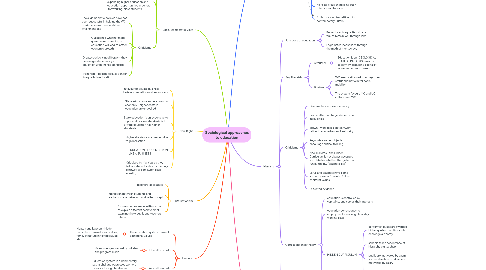
1. Social Democratic View
1.1. They want to see more equality in education
1.2. They believe equality of opportunitiy can be achieved by expanding higher education and education opportunities in general for working-class students.
1.3. Criticisms
1.3.1. Social democratic policies have not been successful in helping the WC in education as there is still an attainment gap
1.3.2. Questioned whether more government spending on education will lead to better economic growth
1.3.3. Greatest critic is neolliberals - they believe greater equality in education undermines standards
1.3.4. Feminists - doesnt discuss gender inequality in education
2. New Right
2.1. In favour of private business - believe competition drives success
2.2. State education can be a drain on economy - higher costs in education are undesired
2.3. State education is unresponsive to pupils and has low standards but private education has higher standards
2.4. Higher standards are needed due to globalisation
2.5. EDUCATION SHOULD BE RUN LIKE A BUSINESS
2.6. Criticised by Marxists as they believe stat education is the only pathway to somewhat class equality
3. Interactionism
3.1. Teachers label pupils
3.2. interaction between students and teachers shape behaviour and self-concept
3.3. focuses on processes within school to explain different achievement - examines how pupils and teachers interact
4. Feminist
4.1. The education system transmits patriarchal values
4.1.1. Heaton and Lawson - hidden curriculum transmits said values, family structure in textbooks, pe, etc
4.2. Liberal Feminists
4.2.1. Acknowledges inequality but also the progress made
4.3. Radical Feminists
4.3.1. Education system is fundamentally patriarchal and oppresses women, Does so through hidden and formal curriculum and sexual harrassment in schools
4.4. Intersectional feminists
4.4.1. minority-ethnic girls have more disadvantages e.g stereotyping
5. Functionalists
5.1. Role of education
5.1.1. Role allocation
5.1.2. Secondary socialisation - social solidarity
5.1.3. Skills provision
5.2. Criticisms
5.2.1. Overemphasises positives
5.2.2. Postmodernists argue that they kill creativity - teach to the test.
5.2.3. View of socialisation doesnt work in multicultural societies
5.2.4. Doesnt factor in rebels to school
5.2.5. Reflects the views of the RC
5.2.6. Marxists argue there is no such thing as meritocracy
5.2.7. Skills provision isnt efficent in contemporary Britain
6. Marxists
6.1. Functions of education
6.1.1. Reproduces inequalities - trains WC to remain WC through jobs
6.1.2. Legitimates inequalities through the myth of meritocracy
6.2. Key Theorists
6.2.1. Althusser
6.2.1.1. Education is an IDEOLOGICAL STATE APPARATUS - maintains society by disguising capitalist values as common values
6.2.2. Bordieu
6.2.2.1. WC are conditioned to accept their status and not aim for social mobility
6.2.2.2. The system favours MC and UC culture over WC
6.3. Criticisms
6.3.1. Overemphasise class inequality
6.3.2. Pay no attention to gender or racial inequalities
6.3.3. Brown - work relies on teamwork rather than obedience of authority
6.3.4. Reynolds - some subjects encourage critical thinking
6.3.5. Neo-marxists - the Hidden Curriculum is not always accepted and debates whether the system is run by the RC (teachers, etc)
6.3.6. LEA's and teachers have some authority so don' have to follow capitalist values
6.3.7. Outdated evidence
6.4. Correspondence theory
6.4.1. education is controlled by capitalists and serves their interests
6.4.2. education corresponds to employment - working class stay working class
6.4.3. HIDDEN CURRICULUM
6.4.3.1. conformist pupils are awarded higher grades than those who challenge authority
6.4.3.2. schools teach acceptance of hierarchy e.g teachers
6.4.3.3. pupils are motivated by exam success like how workers are motivated by salary
6.4.3.4. both work and education are fragmented so that there is little understanding of production/society
6.4.4. myth of meritocracy