


Differentiated Instruction: meeting the needs of all students
por Michaella Cesarini
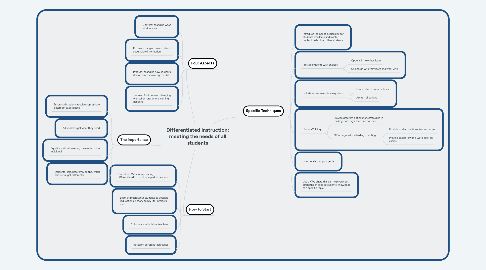
1. Four Aspects
1.1. Content: changing what students learn
1.2. Process: changing how students accumulate information
1.3. Product: changing how students demonstrate knowledge or skills
1.4. Learning Environment: changing with whom and where learning happens
2. The Importance
2.1. Ensures all students receive appropriate classroom experiences
2.2. All students get what they need
2.3. Equality is about meeting the needs of the individual.
2.4. Students learn differently so they must also be taught differently
3. How to Start
3.1. Start slow! Make incorporating differentiated instruction a gradual process.
3.2. Learn as much about students as possible (educational history, family life, interests, etc.)
3.3. Collaborate with fellow teachers
3.4. Research different techniques
4. Specific Techniques
4.1. Introduce "compact curriculum" for students who learn and master content faster than other students
4.2. Provide students with choices.
4.2.1. Options in how they learn
4.2.2. Choices in who they learn and work with
4.3. Include assessments in every class.
4.3.1. Use student-created rubrics
4.3.2. Assign reflections
4.4. Use scaffolding
4.4.1. Provide different options for scaffolding in reading, both high-tech and no-tech.
4.4.2. Offer targeted scaffolding in writing.
4.4.2.1. Provide students with sentence starters
4.4.2.2. Provide students with a word bank on exams