


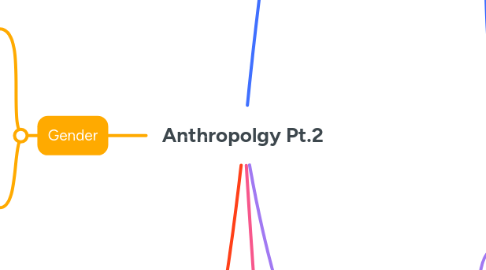
1. Gender
1.1. Cultural Constructions: to explore different societies that enable gender role, norms and expections which alsi include practing ritual,and beliefs surrounding gender
1.1.1. Power dynamic: Gender inersect with other soical categories which include race,class and sexuiality to form different realtionship with socitety.
1.2. Gender performance: Anthropoloist analyze how people perform gender through behavior,appearance and interaction with other, which can also invlove, clothing, language use.
1.2.1. Intersectionality: anthroplogist have recognized multiple social identites that intervine and influence other experience of gender.
1.2.2. Overall gender is a dyanmic and evovling seeking other diveristy of gender identies and experience.
2. Defintion
2.1. gender studies: Research into understanding how gender identities and expressions are shaped by and affect one’s life chances.
2.1.1. transgender: People whose gender identity and performance do not correspond with the biological sex category assigned at birth.
2.1.2. gender ideology A set of cultural ideas, usually stereotypical, about the essential character of different genders that functions to promote and justify gender stratification.
2.2. gender stereotypes Widely held preconceived notions about the attributes of, differences between, and proper roles for men and women in a culture.
2.3. sex: The culturally agreed upon physical differences between male and female, especially biological differences related to human reproduction.
2.3.1. cisgender: People whose gender identity and performance correspond with their birth sex.
2.3.2. intersex The state of being born with a combination of male and female genitalia, gonads, and/or chromosomes.
2.4. gender: The expectations of thought and behavior that each culture assigns to people of different sexes.
2.4.1. masculinity The ideas and practices associated with manhood.
2.4.2. gender stratification An unequal distribution of power in which gender shapes who has access to a group’s resources, opportunities, rights, and privileges.
2.5. sexual dimorphism The phenotypic differences between males and females of the same species.
2.5.1. femininity The ideas and practices associated with womanhood.
2.6. cultural construction of gender: The ways humans learn to perform and recognize behaviors as masculine or feminine within their cultural context.
2.6.1. gender performance The way gender identity is expressed through action.
3. Religion
3.1. Cultural diveristy: anthropologist have recognized that religious belifs and practies vary widly among different cultures and societies
3.1.1. Adaption and change: Anthropologist study how long religous belifs nad practies evolve over time especially over cutual contact,globliztion, and soical chnage
3.2. Symbolism and meaning: Anthrologist study symbolic meaning of current religous rituals,symbols,myth, and text.
3.3. Worldview and Cosmology: Religion is the framework of understanding the world, include conecept of creation and the supernatural.
3.4. soical organiztion: Religion can often play a signficant role in building soical relationship and hierarchies within their communities
3.4.1. However anthroplogy offers a holistc a perspective on religion that examining its cultural soical and historical
4. sexuality
4.1. Cultural variation: Anthroplogy that recongnized that attitudes, norms, partice that can be also related to sexuaily and different across cultures and socitices
4.1.1. Kinship and family: sexuailty is a closley tied to kinship system and family structure in many socirties which show how clutual norms about marriage, reproduction and kinship influence sexual realtioship;
4.1.2. Sexual health nad Globalization: they also investigate how globaliztion morgration and soical chabge impact sexual attiudes and practices
4.2. Gender and sexuailty: they explore the interection of gender and sexuialty that is examing that cultural notion of macsulinity, feminity and other gender identities
4.2.1. Sexual health and reproduction: They also studt the cultural dimension of sexual, reproduction and reproductive rights.
4.2.2. Overall they offer multipul approach of understanding sexuality and examning its cultural, social historical and biological
5. Rite of paaage
5.1. Separations: individual is removed form their previous soical or idenitiy symbolic separating them thir former roles and responsinilites
5.2. Birth: welcoming a new number into the community
5.2.1. Marriage: Initiating indivdual ina socially recgonized partnership
5.2.2. Death: transitioning the deceased form the realm of the living to the afterlife adn comforting the breaved
5.3. Social Function: rite of passage serve serval social funtion within socities
5.3.1. Status and Role change: facilitating transition between social status and roles such as from chilfhood to adulthood or frim singlehood to marriage
5.3.2. Transmission of cultural knowlege: passing down cultural traditon values and knowledge from one geneeration to the next