


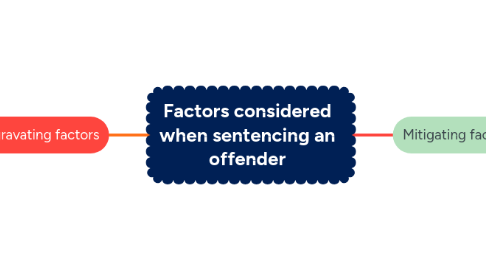
1. Aggravating factors
1.1. Nature and gravity of offence
1.1.1. The violent extent when the offender commits the crime, such as the mens rea and actus reus.
1.2. Aggravating factors
1.2.1. Social factors such as affecting others indirectly, that may give rise to mental health issues.
1.3. Prior offending
1.3.1. Any previous convictions of the offender that can affect the sentencing process.
1.4. Impact of the offence on any victim
1.4.1. The impact on the victims whether it is indirectly or directly.
1.5. Injury, loss or damage as a result of the offence
1.5.1. Any injury, loss, or damage caused by the offender on the victims aggravate the seriousness of sentence imposed.
2. Mitigating factors
2.1. Nature and gravity of offence
2.1.1. The seriousness and complexity of the offence is low and therefore may reduce the scale of penalty imposed.
2.2. Early guilty plea
2.2.1. Early guilty plea saves the court time and resources, in both hearing and trial. Also, this avoids the witnesses to be involved while undergo stress or depression.
2.3. Mitigating factors
2.3.1. The offender commited crimes under duress, accident, sudden or extraordinary emergency, automatism, self-defense, or other approved defences that may reduce the extent of sentence being imposed. Or the injuries caused are minor and therefore does not significantly affect the victim physically.
2.4. Lack of prior offending
2.4.1. The number of past convictions committed by the offender is not so many or maybe none, this influences the sentence imposed to be less severe.
2.5. Remorse
2.5.1. The impact of the crime on the offender that causes themselves to feel regret or guilty about their conduct.