
Webers Tripartite Classification of Authority

Explore the nuances of Webers Tripartite Classification of Authority with this comprehensive mindmap. It dissects each category; Traditional, Charismatic, and Legal-Rational authority, giving a keen understanding of their definition, distinctive features, and real-world examples. This mindmap also delves into notable criticisms, offering a balanced perspective on Webers theory. Ideal for students and socio-political enthusiasts, it provides a well-rounded exploration of the sanctity of tradit...

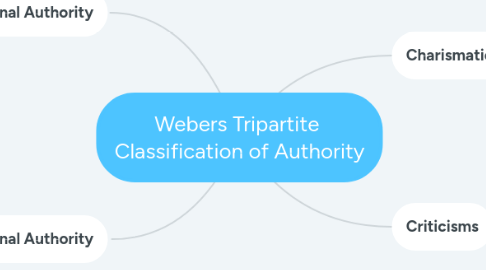
1. Traditional Authority
1.1. Definition
1.1.1. Based on established belief in the sanctity of immemorial traditions
1.2. Features
1.2.1. Legitimized by ancientness, sanctity and continuity
1.2.2. Patriarchy and patrimonialism
1.2.3. Hermeneutic understanding required
1.3. Examples
1.3.1. Royal dynasties
1.3.2. Feudal systems
2. Legal-Rational Authority
2.1. Definition
2.1.1. Based on legal or procedural rules
2.2. Features
2.2.1. Modern form of authority
2.2.2. Laws are well established and impersonal
2.2.3. Expectation of rational restraints
2.3. Examples
2.3.1. Democracies
2.3.2. Courts and legal systems
2.3.3. Modern bureaucracies
3. Charismatic Authority
3.1. Definition
3.1.1. Depends on the charismas and qualities of the leader
3.2. Features
3.2.1. Revolutionary and reactive
3.2.2. Temporal in nature
3.2.3. Dependency on the character of the individual
3.3. Examples
3.3.1. Religious leaders
3.3.2. Political leaders
4. Criticisms
4.1. Talal Asad
4.1.1. Questioned Webers concept of traditional and charismatic authority
4.2. S. N. Eisenstadt
4.2.1. Re-examined Webers theory of charisma
4.3. Theda Skocpol
4.3.1. Criticized Webers theory as overly individualistic