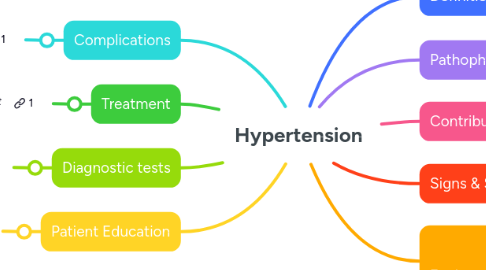
1.1. HTN can lead to other disease such as Myocardial Infarction, Peripheral Arterial Disease, Cerebral Vascular Disease (CVA), Coronary Heart Disease, Atrial Fibrillation, Aortic Aneurysm (Iqbal & Jamal, 2023)
2. Treatment
2.1. Non-pharmacological:- Lifestyle modification through Weight reduction (obesity), salt restriction, smoking cessation, exercise, obstructive sleep apnea management, education, life style changes. Pharmacology :- Antihypertensive medications in drug class such as ACE Inhibitors, ARB Inhibitors, diuretics, beta blockers Single therapy or dual therapy (Iqbal & Jamal, 2023)
3. Diagnostic tests
3.1. 2 Consecutive office visits BP high, 12 lead ECG, blood check up, urine albumin to creatine ratio, history and physical carotid Doppler (Iqbal & Jamal, 2023)
4. Patient Education
4.1. Lifestyle adjustments e.g weight management, limiting alcohol/tabacco intake. Pharmacotherapy education Access to healthcare including regular check ups Access to information. (Iqbal & Jamal 2023)
5. Definition:
5.1. Blood circulation in systemic arteries persistently pumped against high pressures. SBP 140mmHg and above DBP 90mmHg and above. Prevalent in African Americans and diabetics. Cause unknown (idiopathic)(McCance & Huether 2019)
6. Pathophysiology
6.1. An elevation of stroke volume/ heart rate along with or vasoconstriction of peripheral arteries leading to peripheral resistance hence blood pumping against higher pressures leading to hypertension. Shift in hemodynamics and causes of vasoconstriction may be influenced by diseases of the brain, heart and kidneys (McCance & Huether 2019)