


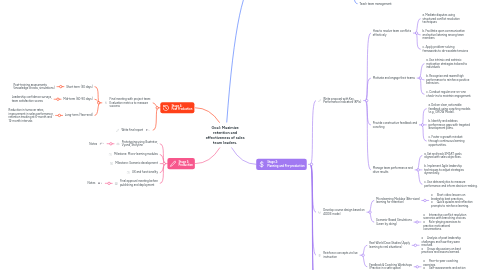
1. Stage 4: Post Production
1.1. Final meeting with project team: Evaluation metrics to measure success
1.1.1. Short term (30 days)
1.1.1.1. Post-training assessments (knowledge checks, simulations)
1.1.2. Mid-term (60-90 days)
1.1.2.1. Leadership confidence surveys, team satisfaction scores
1.1.3. Long-term (Year-end)
1.1.3.1. Reduction in turnover rates, improvement in sales performance, retention tracking at 6-month and 12-month intervals
1.2. Write final report
2. Stage 3: Production
2.1. Prototyping using Illustrator, Vyond, Storyline
2.1.1. Notes
2.2. Milestone: Micro-learning modules
2.3. Milestone: Scenario development
2.4. UX and functionality
2.5. Final approval meeting before publishing and deployment
2.5.1. Notes
3. Stage 1: Needs Assessment
3.1. Strategy Meeting
3.1.1. Attendees
3.1.1.1. Nicholas Delgado
3.1.1.2. TNA Management
3.1.1.3. TNA Management
3.2. Decide on big-picture project goals
3.2.1. Teach conflict resolution
3.2.2. Teach motivational strategies
3.2.3. Teach team management
4. Stage 2: Planning and Pre-production
4.1. Write proposal with Key Performance Indicators (KPIs)
4.1.1. How to resolve team conflicts effectively
4.1.1.1. a. Mediate disputes using structured conflict resolution techniques
4.1.1.2. b. Facilitate open communication and active listening among team members
4.1.1.3. c. Apply problem-solving frameworks to de-escalate tensions
4.1.2. Motivate and engage their teams
4.1.2.1. a. Use intrinsic and extrinsic motivation strategies tailored to individuals
4.1.2.2. b. Recognize and reward high performance to reinforce positive behaviors.
4.1.2.3. c. Conduct regular one-on-one check-ins to maintain engagement.
4.1.3. Provide constructive feedback and coaching
4.1.3.1. a. Deliver clear, actionable feedback using coaching models (e.g., GROW Model).
4.1.3.2. b. Identify and address performance gaps with targeted development plans.
4.1.3.3. c. Foster a growth mindset through continuous learning opportunities.
4.1.4. Manage team performance and drive results
4.1.4.1. a. Set and track SMART goals aligned with sales objectives.
4.1.4.2. b. Implement Agile leadership techniques to adjust strategies dynamically.
4.1.4.3. c. Use data analytics to measure performance and inform decision-making.
4.2. Develop course design based on ADDIE model
4.2.1. Microlearning Modules (Bite-sized learning for retention)
4.2.1.1. o Short video lessons on leadership best practices. o Quick quizzes and reflection prompts to reinforce learning.
4.2.2. Scenario-Based Simulations (Learn by doing)
4.2.2.1. o Interactive conflict resolution scenarios with branching choices. o Role-playing exercises to practice motivational conversations.
4.3. Reinforce concepts via live instruction
4.3.1. Real-World Case Studies (Apply learning to real situations)
4.3.1.1. o Analysis of past leadership challenges and how they were resolved. o Group discussions on best practices and lessons learned.
4.3.2. Feedback & Coaching Workshops (Practice in a safe space)
4.3.2.1. o Peer-to-peer coaching exercises. o Self-assessments and action plans for ongoing improvement.
4.4. Provide continuous performance support
4.4.1. o Job aids (checklists, templates for difficult conversations). o Ongoing mentorship and coaching from senior leaders.