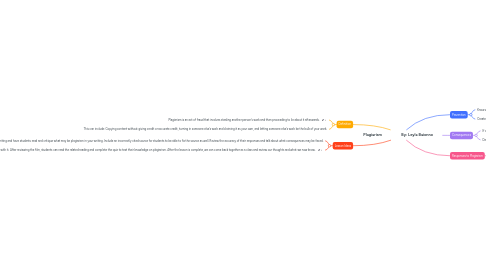
1.1. Plagiarism is an act of fraud that involves stealing another person’s work and then proceeding to lie about it afterwards.
1.2. This can include: Copying content without giving credit or accurate credit, turning in someone else’s work and claiming it as your own, and letting someone else’s work be the bulk of your work.
2. Prevention
2.1. Know what plagiarism looks like and always cite your source, even if you are not quoting word for word.
2.2. Create your own original thoughts and writing with your own notes and perspectives.
3. Lesson Ideas
3.1. After explaining what plagiarism is by giving the definition and prevention, develop a plagiarized writing and have students read and critique what may be plagiarism in your writing. Include an incorrectly cited source for students to be able to fix the source as well. Review the accuracy of their responses and talk about what consequences may be faced.
3.2. First, we can ask students what they know about plagiarism. Then we can follow the Brain Pop plagiarism lesson and watch the film to go along with it. After reviewing the film, students can read the related reading and complete the quiz to test their knowledge on plagiarism. After the lesson is complete, we can come back together as a class and review our thoughts and what we now know.
4. Consequences
4.1. If caught plagiarizing you may be punished by your school, or expelled, fired from an important project or job, and could possibly lose your career.
4.2. Depending on the severity, you may also be involved in a lawsuit and face criminal or civil charges.
5. Responses to Plagiarism
5.1. Plagiarism can lead to trust issues, poor reputation and sometimes implications with the law.
5.2. People tend to feel strongly about plagiarism and feel upset when they are not credited for their work.