


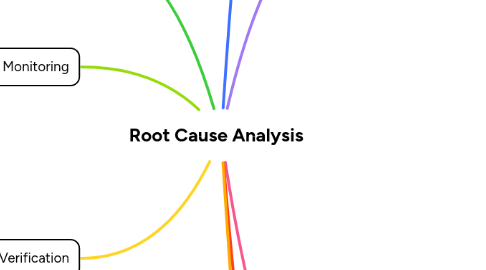
1. Data Segmentation
1.1. Stratification: Breaks down data into smaller segments based on specific criteria, simplifying complex data analysis
2. Process Monitoring
2.1. Control Charts: Monitors process performance over time, identifying trends and detecting variations from expected behavior
3. Data Verification
3.1. Involves various techniques and procedures to validate that the data is correct, complete, and both qualitatively and quantitatively sufficient for the purposes for which it was gathered
3.2. Customer Requirements
3.2.1. Understands and meets customer expectations
3.2.2. Ensures customer satisfaction with products/services
4. Introduction to Six Sigma
4.1. Definition
4.1.1. A methodology aimed at improving process output quality by identifying and removing causes of defects and minimizing variability
4.2. DMAIC Process
4.2.1. An acronym for Define, Measure, Analyze, Improve, Control; the core process used to drive Six Sigma projects
5. 3 Early Stages of Six Sigma
5.1. Define
5.1.1. Problem Identification: Establishing a clear understanding of the issue to be resolved
5.1.2. Voice of the Customer (VoC): Collecting customer feedback and requirements to ensure the outcome meets their needs
5.1.3. Project Charter: A document outlining the project scope, objectives, stakeholders, and timeline
5.2. Measure
5.2.1. Data Collection: Gathering quantitative and qualitative data on the current state of the process or product
5.2.2. Quality Function Deployment (QFD): A tool used to transform customer needs into engineering characteristics for a product or service
5.3. Analyze
5.3.1. Data Analysis: Utilizing statistical methods to identify patterns, variations, and the root causes of defects
5.3.1.1. Scatterplot: Assessing the relationship between two variables to identify trends and patterns
5.3.1.2. Histogram: Providing insights into the distribution and frequency of data points, useful for identifying variations
5.3.2. Pareto Analysis: A technique to identify the major causes of defects, focusing efforts on the issues that will have the greatest impact if solved