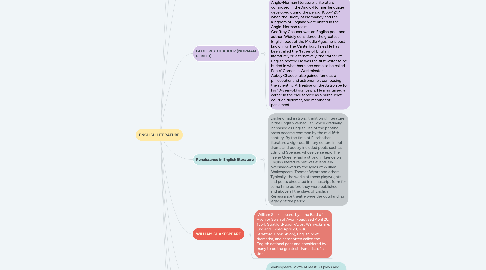
1.1. Medieval literature is defined broadly as any work written in Latin or the vernacular between c. 476-1500 CE, including philosophy, religious treatises, legal texts, as well as works of the imagination. More narrowly, however, the term applies to literary works of poetry, drama, romance, epic prose, and histories written in the vernacular (though some histories were in Latin). While it may seem odd to find histories included with forms of fiction, it should be remembered that many 'histories' of the Middle Ages contain elements of myth, fable, and legend and, in some cases, were largely the product of imaginative writers.
2. BEOWULF
2.1. Beowulf, heroic poem, the highest achievement of Old English literature and the earliest European vernacular epic. The work deals with events of the early 6th century, and, while the date of its composition is uncertain, some scholars believe that it was written in the 8th century. Although originally untitled, the poem was later named after the Scandinavian hero Beowulf, whose exploits and character provide its connecting theme. There is no evidence of a historical Beowulf, but some characters, sites, and events in the poem can be historically verified. The poem did not appear in print until 1815. It is preserved in a single manuscript that dates to circa 1000 and is known as the Beowulf manuscript.
3. ENGLISH LITERATURE OF 11th-14 th century
3.1. The Norman Conquest worked no immediate transformation on either the language or the literature of the English. Older poetry continued to be copied during the last half of the 11th century; two poems of the early 12th century—“Durham,” which praises that city’s cathedral and its relics, and “Instructions for Christians,” a didactic piece—show that correct alliterative verse could be composed well after 1066. But even before the conquest, rhyme had begun to supplant rather than supplement alliteration in some poems, which continued to use the older four-stress line, although their rhythms varied from the set types used in classical Old English verse. A postconquest example is “The Grave,” which contains several rhyming lines; a poem from the Anglo-Saxon Chronicle on the death of William the Conqueror, lamenting his cruelty and greed, has more rhyme than alliteration.
4. GEOFFREY CHAUCER (NORMAN PERIOD)
4.1. Anglo-Norman literature is literature composed in the Anglo-Norman language developed during the period 1066–1204 when the Duchy of Normandy and the Kingdom of England were united in the Anglo-Norman realm. Geoffrey Chaucer was an English poet and author. Widely considered the greatest English poet of the Middle Ages, he is best known for The Canterbury Tales.He has been called the "father of English literature", or, alternatively, the "father of English poetry".He was the first writer to be buried in what has since come to be called Poets' Corner, in Westminster Abbey.Chaucer also gained fame as a philosopher and astronomer, composing the scientific A Treatise on the Astrolabe for his 10-year-old son Lewis. He maintained a career in the civil service as a bureaucrat, courtier, diplomat, and member of parliament.
5. Renaissance in English literature
5.1. England had a strong tradition of literature in the English vernacular, which gradually increased as English use of the printing press became common by the mid 16th century. By the time of Elizabethan literature a vigorous literary culture in both drama and poetry included poets such as Edmund Spenser, whose verse epic The Faerie Queene had a strong influence on English literature but was eventually overshadowed by the lyrics of William Shakespeare, Thomas Wyatt and others. Typically, the works of these playwrights and poets circulated in manuscript form for some time before they were published, and above all the plays of English Renaissance theatre were the outstanding legacy of the period.
6. WILLIAM SHAKESPEARE
6.1. .William Shakespeare, byname Bard of Avon or Swan of Avon, (baptized April 26, 1564, Stratford-upon-Avon, Warwickshire, England—died April 23, 1616, Stratford-upon-Avon), English poet, dramatist, and actor often called the English national poet and considered by many to be the greatest dramatist of all time.
7. W.SHAKESPEARE'S BRILLIANT COMEDIES
7.1. .Shakespeare wrote at least 38 plays and over 150 short and long poems, many of which are considered to be the finest ever written in English. His works have been translated into every major living language, and some others besides (the Folger's holdings include translations in Esperanto and Klingon), and nearly 400 years after his death, they continue to be performed around the world.
8. SHAKESPEARE'S SONNETS
8.1. Shakespeare's sonnets are poems written by William Shakespeare on a variety of themes. When discussing or referring to Shakespeare's sonnets, it is almost always a reference to the 154 sonnets that were first published all together in a quarto in 1609.However, there are six additional sonnets that Shakespeare wrote and included in the plays Romeo and Juliet, Henry V and Love's Labour's Lost. There is also a partial sonnet found in the play Edward III.
9. RESTORATION PERIOD
9.1. The Restoration Period in English Literature includes the raw, sexually-charged form of theater, 'restoration comedy,' the emergence of journalism, and poetry using heroic couplets. Learn the timeline of the pre- and post-Restoration periods and understand the political and philosophical context of this period.
10. ENLIGHTENMENT IN ENGLISH LITERATURE
10.1. The Enlightenment's emphasis on reason shaped philosophical, political and scientific discourse from the late 17th to the early 19th century. Matthew White traces the Enlightenment back to its roots in the aftermath of the Civil War, and forward to its effects on the present day. The Enlightenment – the great ‘Age of Reason’ – is defined as the period of rigorous scientific, political and philosophical discourse that characterised European society during the ‘long’ 18th century: from the late 17th century to the ending of the Napoleonic Wars in 1815. This was a period of huge change in thought and reason, which (in the words of historian Roy Porter) was ‘decisive in the making of modernity’.